What Are Cat 1 Academies? (+ Full List)

Discussions around professional football tend to focus on the winners and losers in high-level competitions like the Premier League. But without all the committed, forward-thinking work that gets done in the English Academy system, none of the players operating at that level would be there.
The youth football landscape in the UK has changed substantially over the last decade, and this article will flesh out one of the key developments, by explaining what a Category One academy is and why academy ranking has been introduced.
What Is The Elite Player Performance Plan?
English football has undergone some significant restructuring in recent years. The nation's struggles consistently developing technically world-class players at the scale of rival nations like France and Spain caused the English Football Association (FA) to consider how young players are prepared for the professional game.
They decided to support the Premier League's 2012 plan to create a brand new national Elite Player Performance Plan (EPPP), billed as "a long-term strategy with the aim of developing more and better homegrown players." The project was initiated by the EPL and voted for by clubs across the English Football League, the Football Association and other key stakeholders in English football.
There are three main phases to the EPPP: Foundation (Under-9 to Under-11), Youth Development (U12 to U16) and Professional Development (U17 to U23). At the Professional Development level, the 2016/17 season saw the creation of a new Premier League 2 system for players under the age of 21 contracted to top-flight clubs.
The creation of this new format was motivated by a desire to bring youth football closer to the physicality and technicality of the senior game, so that players transitioning from academies to Premier League first-teams could do so more smoothly.
Premier League 2 is split into two divisions, with promotion and relegation between the two tiers. In total, there are 25 teams (14 in the top flight and 11 in the second) and each team represents a Category One Academy club.
Your first-team doesn't have to be in the Premier League to play at this level; currently there are 18 EPL clubs in PL2, six clubs from the Championship, and one from League One.
What Has Been The Impact Of The EPPP?
The creation of Premier League 2 came as part of a broader push to narrow the gap between youth football and senior football in England, produce a higher number of top-quality English players capable of adapting to the physical and technical demands of the English top-flight, and ultimately contribute to the long-term improvement of the national team. This plan, spearheaded by EPPP, has broadly been seen as a success.
A huge number of English players with extremely high technical ability have emerged from English academies in the past decade, including Cole Palmer, Bukayo Saka, Jude Bellingham, Declan Rice, Reece James, Kobbie Mainoo, and Adam Wharton.

In the Premier League, more homegrown players are present, with 762 more academy graduates on professional contracts at the end of the 2021/22 season compared with 2012/13. And in tournaments, England's men's teams are more competitive than they've been in decades, with Gareth Southgate's sides reaching back-to-back European Championship finals in 2021 and 2024.
However, while the introduction of the EPPP was approved by EFL clubs, it has also caused controversy and criticism that it harms the lower rungs of the English football pyramid.
As soon as the plan was introduced, stakeholders raised concerns that the EPPP was biased towards richer clubs, as the fixed compensation tariff for players moving between academies allows bigger sides to poach youth players from academies for extremely small fees, preventing those lower-league clubs from receiving a substantial fee when selling their prized assets.
At the same time, the revamp of the English academy system has allowed some EFL clubs to boost their credentials and improve their reputation for producing quality players.
What Is A Cat 1 Academy?
A key pillar of the Elite Player Performance Plan is the categorisation of club academies based on the quality of their education and training capacities. The EPPP requires that each professional club in England is assessed by an independent audit and ranked from a scale of Category Four to Category One, with people within the game often abbreviating this status to Cat 1 or Cat 2.
A Cat 1 Academy is an elite-level academy that is known for consistently producing technically proficient, high-potential players.
These clubs can develop players up until the age of 23, while Category Two and Three Academies develop players from under-nines to under-21s, and Category Four is described as a "late development model" which focuses more on under-17s to under-21s.
Assessors make a verdict on academy ranking based on various factors, including productivity rates, training facilities available, standard of coaching, education levels, and welfare provisions.
By making these standards as high as possible, clubs can increase their chances of being granted Category 1 Academy status, thereby securing enhanced funding from the Premier League and the Football Association. Achieving Cat 1 classification is extremely desirable for most clubs, but it's not easy.
Cat 1 Academies List
Only a select group of 25 British football clubs enjoy Cat 1 status; below we've compiled the full Category 1 football academies list.
Arsenal

With world-class facilities, innovative coaching staff, and pioneering ideas behind the scenes, Arsenal are one of England's leading producers of young talent and have the Cat 1 status to prove it.
Aston Villa
Jack Grealish is the poster boy for Aston Villa's top-level youth system, with the academy graduate underlining some of the great work that's been done at the Bodymoor Heath Training Ground in recent years.
Blackburn Rovers
It's been a while since Blackburn have graced the Premier League but their academy is still consistently producing gems, with recent graduates including David Raya, Adam Wharton, and Spurs youngster Ash Phillips.
Brighton & Hove Albion
The Seagulls' recent rise has been phenomenal, and while they've relied heavily on clever, innovative scouting networks across the world, their coaches have consistently been able to develop them significantly on home soil, with huge progression taking place between the ages of 17 and 23.
Chelsea

The list of players that have emerged from Chelsea's youth set-up in recent years is remarkable, with the likes of Reece James, Trevor Chalobah, Tammy Abraham, Ruben Loftus-Cheek, Dominic Solanke, and Fikayo Tomori all rising through the ranks at the west London club.
Derby County
It's been a few years since Championship outfit Derby County were knocking on the door of the Premier League, but they've consistently developed players with top-flight potential, including Kaide Gordon, Eiran Cashin, and Liam Thompson.
Everton
Every club in the Premier League has Cat 1 Academy status today, but Everton have certainly earned it with several academy graduates shining in the Premier League over the last few seasons, including Anthony Gordon and Antonee Robinson (now at Fulham). Cast your mind back a bit further, and Everton produced one of England's all-time greats: Wayne Rooney.

Fulham
Fulham have certainly benefited from the EPPP, with players like Jay Stansfield and Harvey Elliot snapped up from EFL clubs for a cheap price thanks to this scheme. Add to that list of graduates the likes of Fabio Carvalho, Steven and Ryan Sessegnon, and you can see why Fulham are in the Cat 1 Academies list.
Leicester City
The Foxes' 2015/16 Premier League title-winning team was a rag-tag bunch of pros from across the footballing world, and former academy players didn't feature heavily. However, the club's excellent new coaching facilities — they have one of the most impressive training grounds in English football — mean they're getting better at developing young talent.
Liverpool
Liverpool’s highly impressive 2024/25 title win was achieved partly thanks to several impressive former academy stars, including Trent Alexander-Arnold, Curtis Jones, and Jarell Quansah
Newcastle United
Newcastle United’s academy was granted Cat 1 status in 2014, and since then, the fortunes of the club have changed dramatically, with significantly increased funds available for youth team operations today.
Manchester City
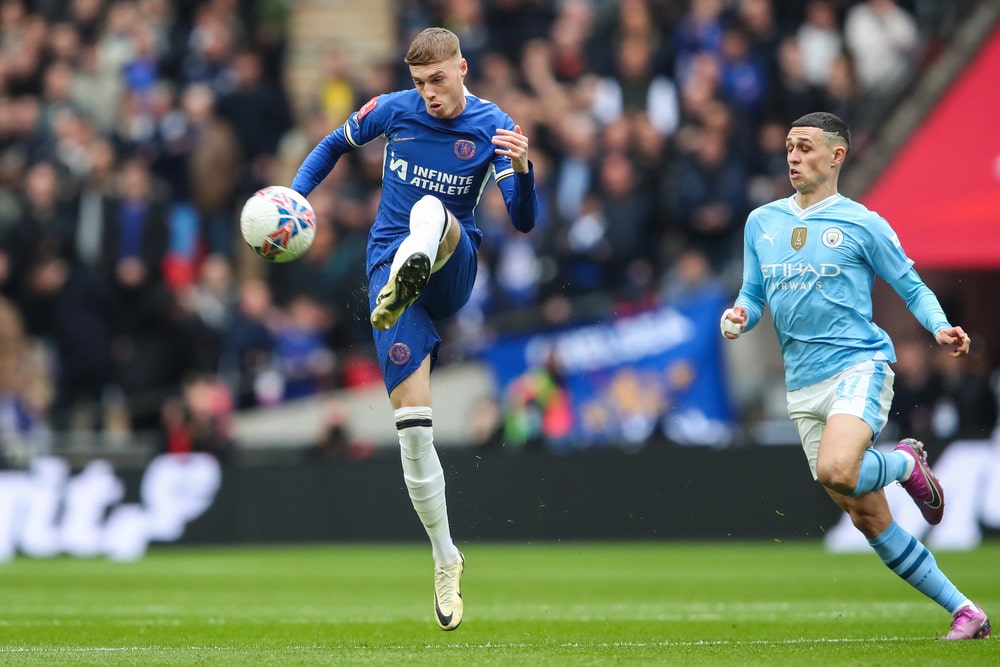
Probably the least surprising club to see on this list, City have massively ramped up their youth team operation since the 2008 Emirati takeover, and graduates like Phil Foden, Cole Palmer and Rico Lewis show how far they’ve come.
Manchester United
There’s been a lot of criticism of United’s infrastructure during the Glazers’ ownership, and understandably so. But they’ve still got the facilities and coaching staff needed to produce top-class youngsters repeatedly.
Middlesbrough
There are a few Boro graduates impressing in the Premier League right now, from Bournemouth’s Marcus Tavernier to Tottenham full-back Djed Spence.
Norwich City
A huge amount of investment has gone into the Canaries’ Colney training ground and youth team set-up in recent years, upgrading the facilities and making them one of just six Championship outfits with Cat 1 status.
Reading
The only League One club to have been granted a Category 1 classification, Reading’s reputation is reinforced by the career trajectory of recently departed former Academy stars like Michael Olise and Omar Richards.
Southampton
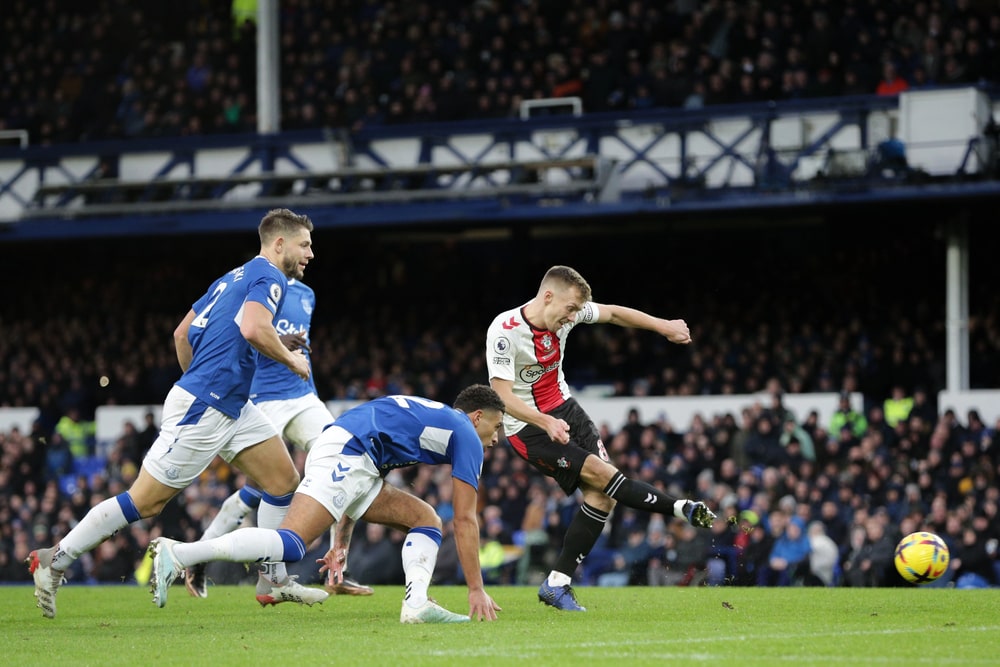
The Saints’ list of former academy players is legendary, with the likes of Luke Shaw, Theo Walcott, Adam Lallana, James Ward-Prowse and Alex Oxlade-Chamberlain all coming through the ranks at the south coast club.
Stoke City
Nathan Collins and Ben Brereton Diaz are two notable graduates of Stoke City’s academy, with the Staffordshire club granted Cat 1 status at the start of the 2022/23 campaign.
Sunderland
In recent seasons, Sunderland have been ripping up the Championship with a succession of exciting young attackers, and their high-level Academy setup is key to this form.
Swansea City
The only Welsh club with a Category 1 setup, Swansea's recent successes have been heavily reliant on Academy-produced players like Joe Allen and Joe Rodon, while other former graduates include Daniel James and Liam Cullen.
Tottenham Hotspur
Neutrals have admired Spurs' significant investment in playing and training facilities, from the Tottenham Hotspur Stadium to their Hotspur Way training ground, so it's no surprise they are classed as a Cat 1 Academy.
West Bromwich Albion
West Brom’s new ownership have focused heavily on youth team investment, but even before their arrival the club had a certified Category 1 Academy, having been an initial top-level EPPP participant in 2012.
West Ham United
West Ham’s academy output in the late 1990s was phenomenal, with Frank Lampard, Rio Ferdinand and Joe Cole all produced during this time. Those were the golden days, but the Hammers still have an elite academy.
Wolverhampton Wanderers
Wolves’ academy and training ground revamp coincided with the introduction of EPPP in 2012, and they’ve benefited from the extra resources Cat 1 status affords ever since.
Related Articles

What Are Patterns Of Play? (And How To Coach Tactical Patterns)
