What Is A High Line In Football? (+ Benefits and Drawbacks Of Using It)

In recent years, many old-school football pundits have expressed frustration about the ever-growing influence of new terminology like 'high press', 'counter-pressing' and 'transition' in modern football.
At their core, these phrases are all about providing people with more precise and technical language to describe footballing actions we sometimes take for granted. But the pushback does reflect how some fans struggle to keep up with the changing nature of the sport's vocabulary.
That's why we're breaking down what pundits, coaches and analysts mean when they use phrases like half-space, press resistance, and principles of play, drilling down into the details and examining how these terms help us understand the game better.
In this article, we'll be exploring what is meant by a high line in football; these are two words you hear increasingly often in discussions about football, but there's still plenty of confusion about exactly what a high line is and why coaches are so fond of it. Here, we'll explain in detail why the high line is so crucial to modern tactics.
What Is A High Line In Football?
In football, the term 'high line' refers to the positioning of a defensive line high up the pitch.
Exactly where the line is stationed depends on the situation; when a team is in possession and attacking in the opponents' final third, their back line will usually be set around the halfway line, although when the opposition gets possession and breaks forward, it's likely to drop a little deeper.
Typically, we talk about high lines in relation to a back four unit, which remains the most common type of defensive setup in football. However, high lines can also be deployed by a back three.
They've become increasingly fashionable in modern football as top coaches look to make their teams front-footed and aggressive, rather than sitting back in a low block, absorbing pressure, and counter-attacking (a favoured strategy of managers like Jose Mourinho or Diego Simeone).
We'll explore why that is shortly, but first, it's worth briefly fleshing out how counter-pressing works and why it's led to some coaches tweaking their methods.
On paper, counter-pressing (a strategy in pioneered by German coaches like Ralf Rangnick and Jurgen Klopp, which sees forwards and midfielders attempt to win the ball back as high up the pitch as possible) might look like it's all about attackers. But this strategy is actually heavily reliant on the positioning of defenders.
In the first phase, the job of forwards is to block certain passing lanes, while the midfielders behind them must also mark certain spaces and players in order to stop the ball being moved into threatening areas.
But if the defensive line behind these two blocks is not appropriately set up, all that would be for nothing. A high line is a key facet of any system that looks to press the opposition with intensity. As a result, the increased prevalence of the high press in football has caused the popularity of the high line to skyrocket.
The Benefits of Using a High Line in Football
Title-challenging teams — particularly in high-intensity leagues like the English Premier League — have tended to opt for a similar tactical system in recent years.
While there have been some outliers, the majority of high flyers operate with a high press at the top of the pitch (meaning that attackers close down opposition defenders aggressively when out of possession) and a high line at the back. Rolling out these two strategies together makes sense, because it ensures that no big gaps are left open in midfield.
And whether it's Pep Guardiola's Manchester City or Jurgen Klopp's Liverpool, most top sides have chosen to play in this way. But why?
A key advantage of playing with a high line — and this is essential to the broader counter-pressing strategy that high lines contribute to — is to increase a team's chances of winning the ball back as quickly as possible after losing possession.
When you drop your defensive line and sit off the ball, it becomes very difficult to regain possession from the opposition; however, if you station your defenders, midfielders, and attackers high up the pitch, blocking out passing lanes and putting pressure on the opposition, you're much more likely to win the ball back quickly.
For teams that look to rack up possession figures of 60% or 70%, regaining possession with speed is essential.
Similarly, using a high line can also stamp out attacking opportunities for the opposition. Typically, the left-back and right-back in a back four will be tasked with getting tight to the opposition wingers, and ensuring that they're not given space to dribble and complete dangerous passes.
In the middle of the pitch, meanwhile, the two centre-backs will put pressure on the opposition forward(s), getting tight and making sure that either they don't receive the ball, or, if they do, a firm challenge will come in straight away.
It's often said that attack is the best form of defence; by being front-footed and using a high line to stamp out opposition attacks before they properly get started, coaches can limit the threat posed by their opponents.
At the same time, they can reduce the distance that midfielders and forwards need to drop back when possession is lost, allowing them to remain in the advanced areas that they operate best in.
Examples of Teams Playing a High Line Effectively
Perhaps the most obvious example of an elite-level modern team regularly using a high line effectively is Jurgen Klopp's Liverpool. The beloved Reds boss played a key role in bringing counter-pressing to England, and his philosophy hinged on his back line being stationed extremely high up the pitch.
While there was plenty of variation in personnel over Klopp's nine years at Liverpool, at its peak this unit was composed of Trent Alexander-Arnold (RB), Virgil Van Dijk (CB), Joel Matip (CB) and Andrew Robertson (LB), and their high positioning consistently allowed them to give talented midfielders and forwards chances to counter-press and create chances in advanced areas. It also helped them frustrate opponents by regularly using an offside trap to nullify long balls over the top.
A great example of that came in the 2022 League Cup final, when Liverpool triumphed over Chelsea thanks in part to the West London side having three goals disallowed for offside as forwards struggled to adjust their positioning and time their runs appropriately when playing against Liverpool's high line.
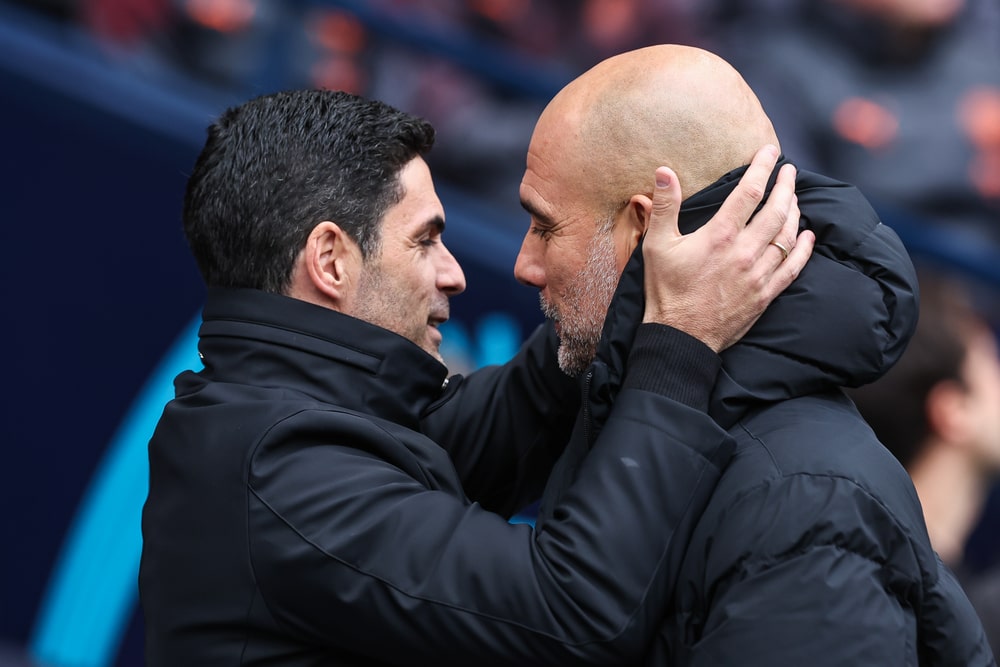
Pep Guardiola's Manchester City have also consistently deployed a high line to squeeze space in their opponents' half and ensure they can dominate possession and win the ball high up the pitch.
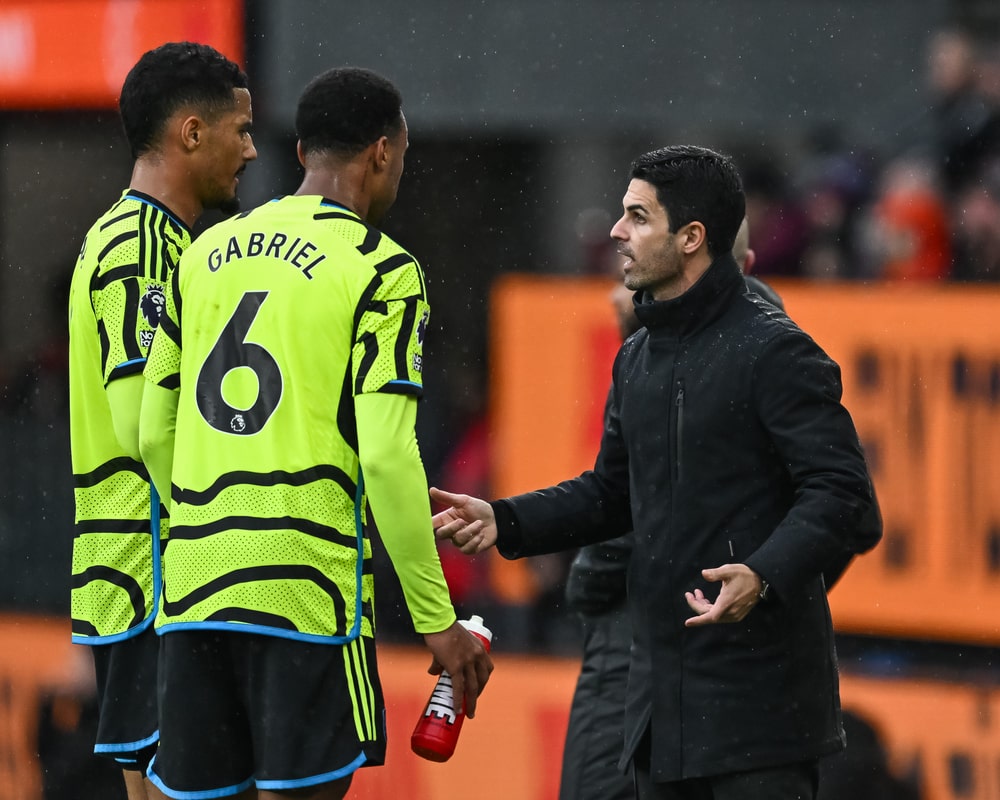
Mikel Arteta's Arsenal may regularly receive criticism for playing defensively in crucial Premier League games against fellow top six sides, but in reality Arteta has also frequently used a high line to help bring his game philosophy — rooted in intense pressing, possession and strict control of the game — to life.
The Drawbacks Of Using a High Line in Football
Klopp's Liverpool may have been a brilliant example of how effective a high back line can be, but that very same side were also thwarted on several occasions as a result of using this policy.
In their extremely disappointing 2020/21 Premier League title defence (an unusual season played almost entirely in lockdown), Liverpool conceded numerous goals that were the result of fast, intelligent forwards exploiting the fact their defenders were so high up the pitch.
Analysis on how Wolves were able to beat the Manchester City press and the impact on Manchester City new high line as shown on MNF ✍️@xpsnetwork 🎥
— 3rd Man Movements (@3rdmanmovements) August 19, 2025
pic.twitter.com/d7bxuGAlGC
This happened most notably at Villa Park in October 2020, when Ollie Watkins relentlessly punished Liverpool's defence by speeding onto long balls over the top and dispatching his chances clinically while Van Dijk and co. lagged miles behind.
The glaring issue with Klopp's tactics was quickly exposed by Jamie Carragher on Sky Sports, with the former Reds defender saying: "I don't like it and I don't agree with it, the way they play, they're trying to catch people offside.
This team play high up the pitch, and almost sacrifice one big chance a game for the opposition going through on the goal, but they look at the benefits of that of actually winning the ball."
Carragher criticised Liverpool continuing to play the same way even when it clearly wasn't working, adding "there's nothing wrong with playing with a high line, but when that press is not there or the opposition beat the press… they stand and wait and try and play offside, I hate teams that try and play offside.
I think in that position you've got to be ready… when someone's ready to kick the ball, you've got to be ready to run back."
Under Ange Postecoglou, Tottenham Hotspur consistently got punished for playing with a similar philosophy, although the uber-principled Australian coach only doubled down on his style of play, telling reporters "It's just who we are mate" after a particularly bad 4-1 loss to Chelsea in November 2023.
Both these examples sum up the primary drawback of playing with a high line: one well-timed, well-directed ball in behind, and you are extremely opposed, with the opposition forward getting a prime opportunity to take on your goalkeeper one-on-one.
These types of goals are often so simple-looking and devastating in their speed and efficacy that the drawbacks of a high defensive line are exposed in shocking clarity. Offside traps can be designed to reduce the risk of this, but as with Liverpool, an over-reliance on catching opponents offside can sometimes backfire dramatically.
If you'd like to find out more about how high-pressing teams like Jurgen Klopp's Liverpool like to set up, why not check out our in-depth guide to the rise of gegenpressing and its role in modern football.
Related Articles

What Is An Inverted Winger? (+ Tactical Analysis)
