The Target Man: Football Tactics Explained

Some of the terms used within football are a little outdated. One of the most positive sporting stories in recent years has been the rise of women's football across the UK, Europe, and the rest of the world, which has brought immense value to many players, fans, coaches, and clubs.
However, much of the language that has become commonplace within the traditionally male-dominated sport doesn't reflect the historical presence of women in the game, from the term for assistant referees, 'linesman', to phrases like 'man marking' or "target man".
It's likely that as we move forward, more inclusive terms may become more widely used in football, but for now, they continue to serve a purpose when we discuss tactics and styles of play.
So in this article, we'll temporarily park that issue as we address the latter term and explore what a target man in football is.
We'll dive into the role of target men, the key physical and technical attributes these players need to have, and the benefits a coach can get from deploying this style of player.
We'll also explore how recent developments in tactics and strategy have changed our understanding of what a typical striker is in modern football.

What Is A Target Man?
In football, 'target man' is a phrase used to describe a big, physically dominant central striker who functions as a key attacking outlet and is expected to perform a range of dedicated tasks in each game. These tasks include:
- Engaging in physical duels with opposition defenders and using their bodies to apply pressure to their back line
- Excelling in hold-up play, collecting and shielding the ball before bringing other players into the game in advanced areas of the pitch
- Winning attacking headers, whether in open play situations or from set-pieces (eg. corners, free kicks, and goal kicks)
- Penetrating the opposition defence with dangerous attack-minded runs
- Getting on the end of crosses and taking shots on goal
- Providing decisive goal contributions and showing a killer instinct in the final third
What Are The Benefits Of Having A Target Man?
Regardless of individual playing philosophy and ideals about the game, most coaches would be keen to have a powerful, physical centre-forward with an eye for goal in their team.
However, playing with a target man unquestionably benefits certain styles of play more than others.
If a coach favours a direct playing philosophy focused on penetrating the opposition back line with long balls or crosses from out wide, having a target man up top can be hugely beneficial.
There's no use swinging balls into these areas if you don't have someone capable of outmuscling and outmaneuvering their opposite number and getting on the end of the cross. But if scoring goals from corners and free kicks is a key aim of yours, target men can play an important role in helping you accomplish that goal.
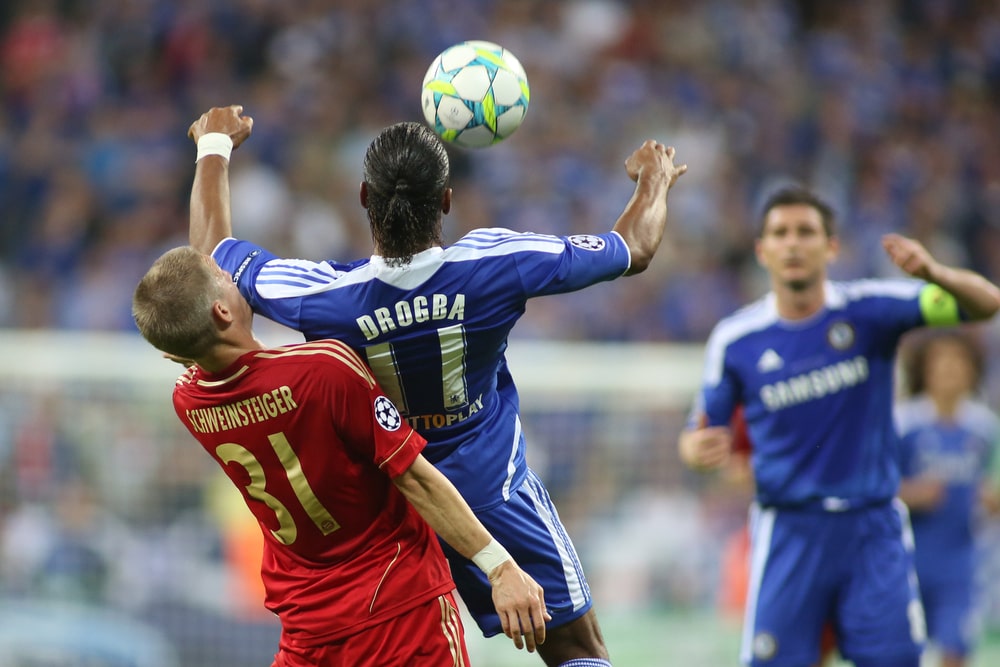
These types of players tend to also be great at getting the ball to more technical attacking midfielders.
If you'd rather not play out from the back but you've got a playmaker who's desperate to receive the ball to feet and make things happen, centre forwards can be used to receive and hold up the ball with their back to goal, before passing it to these more creative teammates in advantageous positions.
Since this may sound easier than it is in reality: to accomplish these goals, target men need to have a range of different skills and attributes.
What Traits Does A Target Man Need?
Central defenders tend to be the biggest, toughest players on the pitch. Given that a target man will inevitably end up squaring up against the other team's centre-backs, these forwards will tend to be tall, strong, and physically dominant.
A Target Man needs to be able to use their body to hold off defenders, and they need to have the height and jump required to regularly win headers against towering opponents.
Aerial ability is a crucial part of the target man role: whether it's winning flick-ons into the wide channels, supporting midfielders with gentle knockdowns into their feet, or firing bullet headers into the top corner of the net from close range, they must be capable of performing a range of headers in different scenarios.
As well as contributing to attacks in open play and from set plays, bigger strikers will often be brought back to help defend corners as well.
We've touched on hold-up play already, but in the modern game, where transitions from defence to attack are more important than ever before, and when high-pressing teams create intensified pressure on defenders, it's even more important that strikers are able to look after the ball, relieve pressure and bring teammates into play.
Target men often provide a link between midfield and attack, and in order to perform this role properly, they need to have a great first touch, strong close control skills, and sharp passing ability.
Tactical intelligence and positional awareness is also crucial; target men need to be able to time their runs perfectly to pick up the ball in spaces where they can exploit opposition defenders, and they need to know when to drop in and connect with midfielders, and when to stretch the opponents' back line and push into a more advanced space.
The target man position may sound like a simplistic one that revolves mainly around physical qualities, but there's a huge amount of technical and tactical work that goes into the role as well.
Is The Target Man Role Outdated?
The phrase 'target man' itself may be a little outdated, but this is a position that has still been reworked and updated in the modern game. Today, it's very rare to see a top-level striker lumbering around, refusing to engage until the ball reaches the final third: mobility and dynamism are key, and most strikers are expected to press the opposition back line and force mistakes or help push the ball into specific areas of the pitch.
Still, it's worth noting that even today, many traditional target men lack pace and rapid acceleration, so playing with this kind of striker isn't always the most dynamic and fluid style to adopt.
It's rare to have a modern striker who can't effectively press the opposition back line, but if this is the case, it's a huge disadvantage given the importance of high pressing these days.
There's also less adaptability in terms of tactical systems when you play with a traditional target man, and if a coach relies too heavily on playing long-balls to their centre-forward, their team can risk becoming very one-dimensional and easy to predict.
If the opponents work out how to isolate this forward and stop them from having an impact on the game, the whole attacking strategy becomes deeply flawed.
The Evolution of the Target Man: What Are The Modern Alternatives?
The aforementioned issues with the traditional target man role mean that certain tweaks and changes have been made to the position.
The idea of simply lumping it to the big man up top is no longer attractive to most coaches, and as such we've seen an evolution of the target man role, with big, combative centre forwards like Erling Haaland providing far more than just physical dominance.
Haaland is mobile, dynamic, and super quick, capable of sprinting beyond a backline or engaging in a press. Elsewhere in Europe, other tall, physical forwards like Viktor Gyökeres and Dusan Vlahovic have shown themselves capable of pressing from the front and providing much more than just a physical presence and goal-scoring abilities.
Another interesting adaptation to the traditional striker position is the evolution of a deeper-lying forward role, pioneered by Harry Kane at Tottenham Hotspur as the England captain took control of creative efforts as well as goal-scoring exploits.
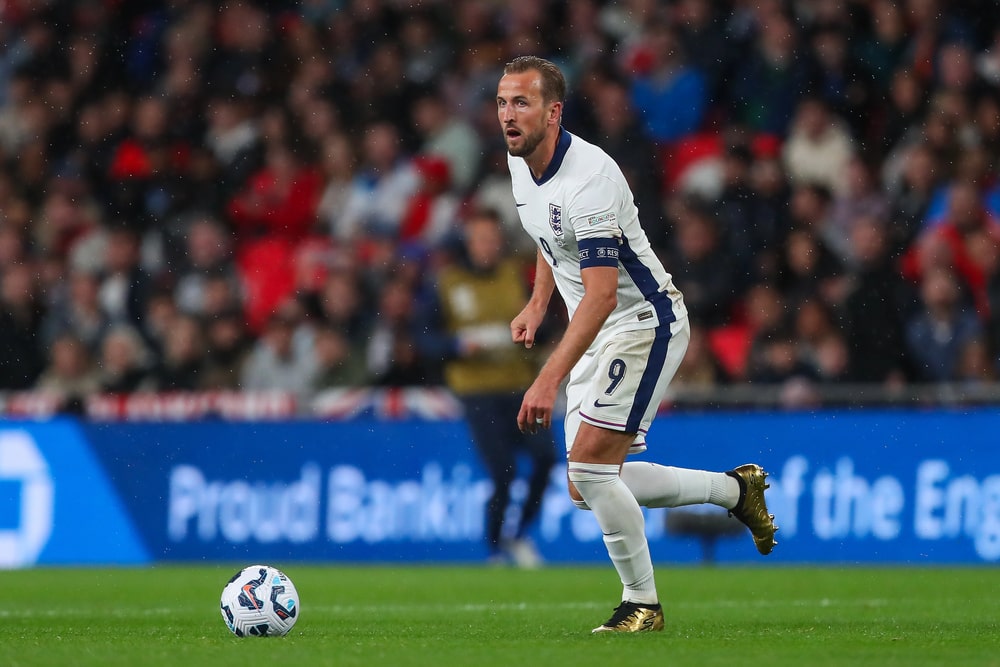
Back in the day, Kane would've been an old-school centre forward, but his technical ability and positional awareness has left him dropping deeper to link up midfield and attack and operate as a playmaker at times.
This is another example of how the process of coaches using a target man has changed over the years.
Elsewhere in recent times, more traditional target men like Olivier Giroud, Robert Lewandowski, Mario Mandzukic and Didier Drogba have had a massive impact on the European game, showing the clear benefits to having a focal point up top who can hold up the ball, show physicality, win aerial duels, and bag tons of goals.
These are all still key requirements for many modern strikers, but there's no denying that the game has changed. In the Premier League and other elite football competitions, it's no longer enough to just hit the ball long to the big man up top.
Far more complex and nuanced tactical plans have taken centre stage, and this area of the game is only going to grow.
If you want to find out more about how the tactical approach of most modern coaches differs from 20th century predecessors, check out our guide to the popularity of playing out from the back in football.

Author: Fred Garratt-Stanley
Lead Content Writer
Fred Garratt-Stanley is an experienced football writer and journalist, specialising in industry insights, tactical analysis, and the culture of the game. He has contributed to publications such as NME, GQ, The Quietus, and Resident Advisor. As Lead Content Writer at Jobs In Football, he focuses on providing reliable, research-driven articles to help people navigate careers in the football industry.


Related Articles

What Is Man Marking? (And How Does It Compare To Zonal)
