Years in the Making: The Key Personnel Behind Arsenal's Title Win
On Tuesday, 19 May 2026, 22 long years after their last Premier League title, Arsenal FC became champions of England once again. Fans erupted into wild celebrations across North London after a 1-1 draw on the south coast between Bournemouth and fellow title chasers Manchester City confirmed that the Gunners' lead at the top of the table was unassailable.
The old insult that Arsenal are "bottlers," incapable of getting over the line when it matters, no longer qualifies. In fact, there's now no English club that has won the top flight in more decades than Arsenal.
We all know the pivotal role Mikel Arteta has played in this story, and the way he's brought the best out of star players like Martin Odegaard, Bukayo Sako, William Saliba, and Gabriel. But what about the lesser-known figures who have shaped Arsenal's title charge behind the scenes? In this article, we'll focus on the key personnel who contributed to this remarkable season.
Mikel Arteta
Pep Guardiola's disciple first got a taste of success as a young assistant coach at the Etihad; when the opportunity came to take on his own head coach role aged only 37, it was impossible to turn down. Progress was slow at first, but the way Mikel Arteta has shaped Arsenal in his image over the past six years is extremely impressive.
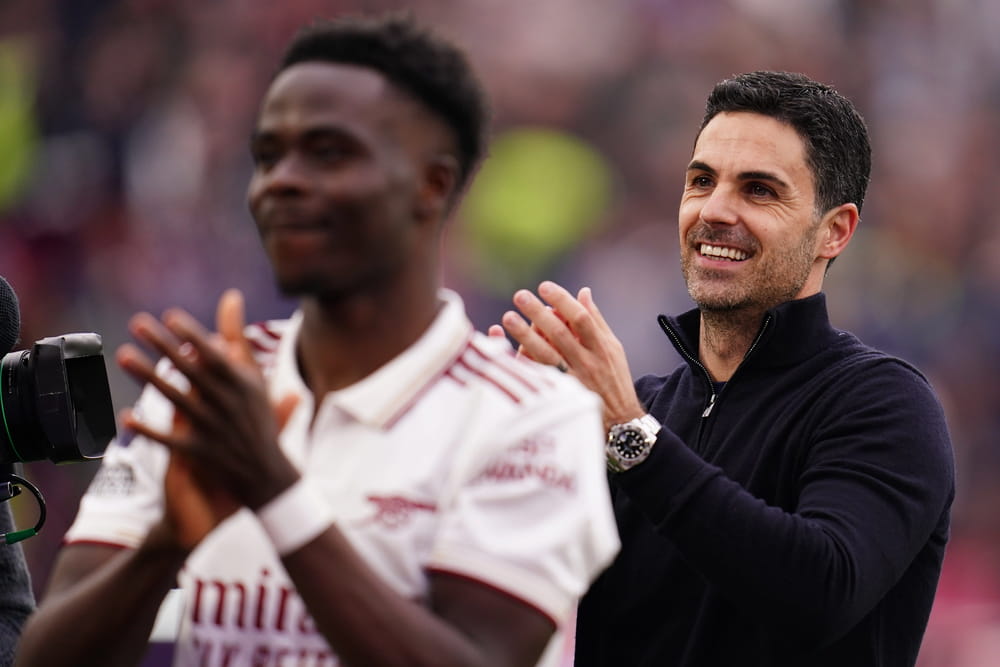
Acclaimed for his remarkable attention to detail and energy on the training ground, he's masterfully transitioned Arsenal from an aging, underperforming squad to a fresh, young, dynamic group packed with talented players peaking at just the right time.
Arteta may have gained some criticism for his slightly performative and unorthodox motivational methods (and the Gunners' reliance on set pieces and cautious, physical performances), but at the same time, he's taken heat away from his players and adeptly managed English football's challenging media landscape.
Without the former Arsenal midfielder — whose built-in love and enthusiasm for the club has been essential in winning over fans — none of this would have been possible.
Tim Lewis
In the winter of 2020, with Arsenal languishing in mid-table and Arteta's job genuinely under threat, the Basque manager took a trip to Denver to meet club owner Stan Kroenke alongside the then non-executive director Tim Lewis.
According to The Athletic, at this meeting Lewis played an important role in pitching the strategy that would eventually help Arsenal lift the Premier League trophy once more, a strategy centred around identifying and exploiting the team's potential "win window".
This was a period between 2023 and 2027 in which key individuals like Lewis identified that Manchester City and Liverpool — England's two most dominant teams — were likely to drop off due to a combination of ageing squads, contract lengths and managerial timelines.
Arsenal played the long game, buying younger players who were expected to peak during this window, and ensuring everything was geared up to make the most of this opportunity. Ultimately, that strategy paid off, although Lewis wasn't there to witness Arsenal get over the line.
After five years on the club's board, and two as executive vice-chairman, he left in September 2025, just weeks after culminating a big summer of recruitment. This came after Lewis effectively helped transition owner Josh Kroenke into a more active day-to-day position at the club (more on this shortly).
Edu Gaspar
One of the things Tim Lewis led on at the Emirates was the phasing out of a tired recruitment strategy led by the previous Director of Football Raul Sanhelli, and overseeing Sanhelli's departure. The ex-director did make one extremely valuable decision, though: the appointment of Edu Gaspar as a technical director in 2019.
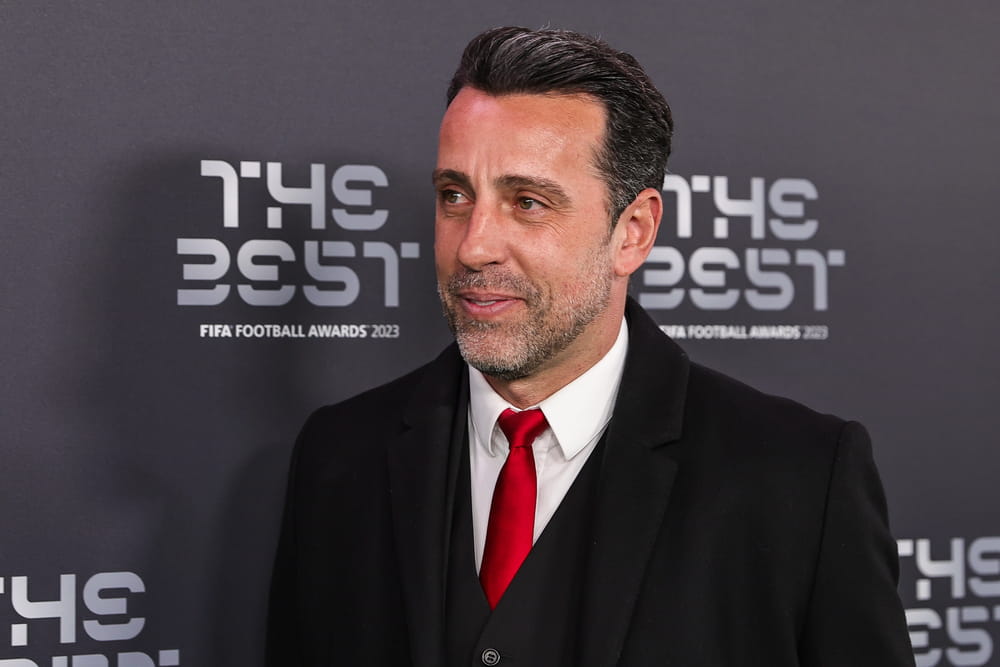
Edu was the man who brought in Mikel Arteta and pioneered the club's drive into the future with a secretive "five-phase plan". Edu controversially left the Emirates in late 2024 to work on Evangelos Marinakis' multi-club ownership scheme, but the impact he had in his five years in North London cannot be overstated.
As well as bringing in Arteta and later promoting him from 'head coach' to 'manager', thereby giving him more authority and decision-making responsibilities, Edu purged an underperforming squad, overhauled the scouting department, and moved to a recruitment strategy based on signing players under the age of 24, for smaller fees.
Data and analytics were given greater credence, with the use of a Chicago-based company called StatDNA "recalibrated" and a heightened focus on "trusting the process" — now a widely recognised Arteta-ism — emerging.
Edu went on to bring in players with Premier League-winning experience, like Gabriel Jesus and Oleksandr Zinchenko, while interestingly also focusing on developing a strong English core. "We need a top, top English player who has a good reputation everywhere: in the press, in the clubs, in every aspect, to give some more credibility to English football. Because we are a club in England and we need to have the best English players in our squad, like Bukayo [Saka]," Edu said.
James Ellis
One of Edu's most transformative appointments, James Ellis helped transition Arsenal into a recruitment model focused on developing younger players who would peak during the "win window" they'd identified.
According to BBC Sport, "Ellis was tasked with improving what was coined Arsenal's 'football intelligence' unit in the UK, with a view to helping the club make better-informed market decisions," based around "emerging technologies and data analytics".
Ellis' talent identification methods haven't just been vital for men's first team operations; they've also been implemented across the academy and the pre-academy, and for the women's teams as well.
Signings like Declan Rice and Jurrien Timber may seem obvious moves in hindsight, but they're the direct result of Arsenal's football intelligence unit. "I was very lucky to be working with some very talented people," said Ellis, who left the club recently and has now been unveiled as Bristol City's new sporting director. "We were all committed to a plan over a period of time to support the growth and development of performance."
Mark Curtis
Mark Curtis has headed up Arsenal's football intelligence unit since July 2025, and made notable changes to the operation during his time at the helm.
Arsenal are focusing more on South American markets, and continue to lean into new developments in data and analytics; crucially, Curtis also contributed to the massive £250m summer outlay that ultimately gave this current squad the depth of quality it needed to get over the line in a title race.
Curtis started at the club as an analyst in 2013, and has gradually risen through the ranks with stints in first-team scouting and as assistant head of recruitment between 2023 and 2025; the players he helped bring in have more than paid him back for this long period of service to the club.
Richard Garlick
Another person worth mentioning is Richard Garlick, a core ally of Edu in the early days of Arteta's reign, and Chief Executive Officer at the club since September 2025 (he was previously managing director).
Josh Kroenke on Richard Garlick becoming Arsenal's new managing director in summer, 2024.
— Charles Watts (@charles_watts) January 25, 2024
“Richard has made an enormous impact since joining us. He has been key to the progress we’ve made as a club – including recent transfers. I’m thrilled he will now lead our Executive Team." pic.twitter.com/uMr5zlS393
The significant spending last summer threatened to place Arsenal at risk of violating the Premier League's financial rules, but their domestic and European performance (reaching the final of the UEFA Champions League and securing $86m at least from this competition alone) ultimately justified that spending.
Juliet Slot
Working alongside Garlick as Chief Commercial Officer, Juliet Slot has helped boost the commercial power of the club, overseeing record revenues that have helped facilitate the kind of increased squad spending we've seen in the last couple of years.
It's not an easy skill achieving high-level domestic and European performance while also remaining financially stable and compliant with league rules — Slot has been essential in guaranteeing this balance.
Nicolas Jover
Much has been made of Arsenal's reliance on set pieces over the past couple of seasons. They have become the Premier League's most dangerous side when it comes to attacking corners, breaking the record for the most goals from corners scored in a single season (18) in 2025/26.
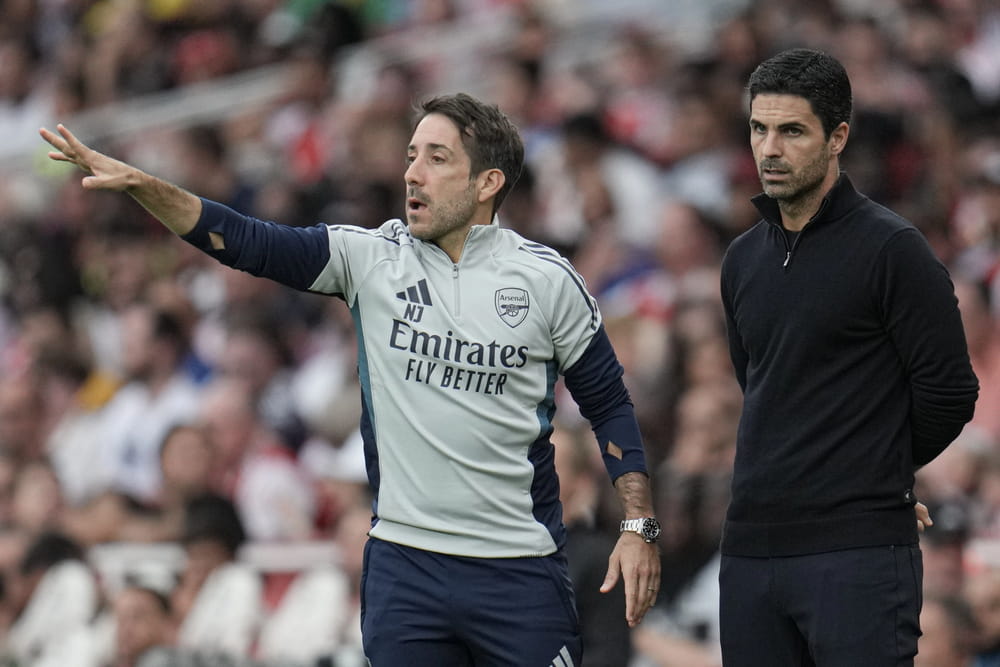
They rarely ever concede from set pieces either, and largely this is down to the training ground work of set piece specialist Nicolas Jover. The former Brentford and Manchester City coach was persuaded to join Arsenal in 2021, and since then he's transformed their performance from set pieces, playing a decisive role in turning them into Premier League champions.
Jason Ayto
The number of key Arsenal figures who have gone on to more senior positions at other clubs in the last year is a testament to the value of their work at the Emirates. Jason Ayto, who was appointed sporting director of Brighton & Hove Albion in September 2025, is a great example of this.
Previously a scout and analyst at the club, Ayto became assistant sporting director in April 2023, supporting Edu until his departure before assuming the former sporting director's role on an interim basis. Ayto was reportedly considered for the role permanently, but ultimately the club opted to bring in someone external.
Andrea Berta
Edu's long-term replacement as sporting director, Andrea Berta, arrived at Arsenal in March 2025. He came with a stellar CV, having worked as Atletico Madrid's sporting director for 12 years, overseeing one of the most successful spells in the club's history.
🚨 Arsenal’s new Sporting Director is here.
— Jobs In Football (@JobsInFootball) April 8, 2025
🔍 Who is he?
🔥 His 6 best signings
⚽ What Arsenal fans can expect
Read the full profile 👉 https://t.co/h4d9ZWUkoG#Arsenal #AndreaBerta #Transfers #FootballNews #JobsInFootball pic.twitter.com/Bt83eqgJk8
At Atletico, Berta was responsible for recruiting players like Rodri, Jan Oblak, and Antoine Griezmann, and he instantly implemented that transfer know-how at the Emirates with a hugely significant summer window that saw the likes of Eberechi Eze, Martin Zubimendi, Viktor Gyökeres and Noni Madueke enter the fold.
Berta built on the strong foundations established by Edu and Ayto, and masterminded the transfer window that finally gave Arsenal the squad depth they needed to win the Premier League.
Josh Kroenke
In recent years, Arsenal's majority shareholder Stan Kroenke has encouraged his son Josh to take a far more active role in the day-to-day running of the club. Vice-chair of ownership group KSE and Co-Chair of Arsenal alongside his father, he's been on the board since 2013 but it was only after Tim Lewis' appointment that he became a regular presence in North London.
Josh Kroenke has held a position on the football leadership team for the last five years, with Lewis showing him the ropes, and the American then assuming more power after Lewis' departure.
Kroenke's presence played a key role in Arteta staying as head coach through some of the worst periods. After losing the first three league games of the 2021/22 season, for example, Kroenke was filmed telling the head coach "The only people you can trust are the ones in the room with you right now.
Trust me, I believe in you." Other people have played a more decisive role in Arsenal's title success; but there's no doubt the owner should be commended for this judgement.
Next up, check out our article on Mikel Arteta's tactics explained.
Related Articles
- How Mikel Arteta’s tactics transformed Arsenal
- Andrea Berta: profile of Arsenal’s new sporting director
- Why Edu left Arsenal for Marinakis’ multi-club group
- How Arsenal became the Premier League’s set-piece specialists
- Understanding the role of a sporting director
- Why are football managers getting younger?
- The 10 highest-paid football managers in the world
- Premier League prize money explained