Liam Rosenior Tactics Explained
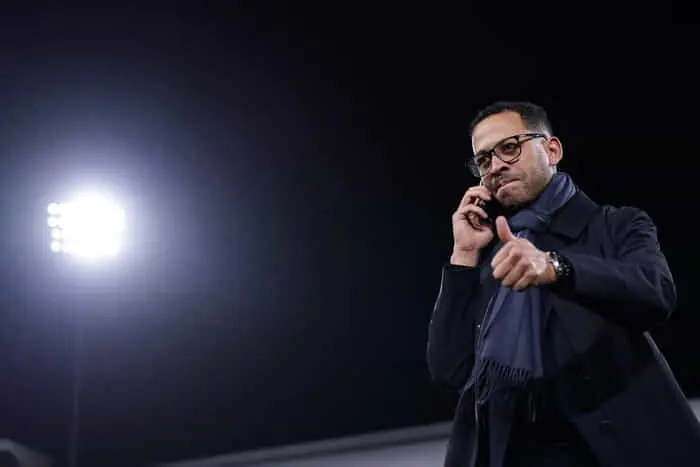
Chelsea’s recent decision to hire Liam Rosenior as their new head coach raised a few eyebrows. Partly this was due to the young coach’s lack of experience, with Rosenior only having managed 153 senior games before joining the west London club, none of those in the English top flight.
Another factor that caused some controversy was Rosenior being snapped up from Ligue 1 outfit Strasbourg, a club also controlled by Todd Boehly’s Chelsea ownership group BlueCo; many saw the move as a convenient and cynical in-house appointment, highlighting the unequal power dynamics of multi-club ownership groups.
Despite these criticisms, there are plenty within the game who think Rosenior shows real promise as a coach. He’s been praised by some huge figures, with England and Manchester United legend Wayne Rooney insisting Rosenior is “as good a coach as I’ve ever worked with”.
Still, so early on in his senior management journey, it’s hard to fully grasp the level Chelsea’s new boss is at. Rosenior is an extremely driven individual with strong ideas about how he wants his teams to play, but right now many fans are still unclear about exactly what entails.
That’s why in this article, we’ll be briefly mapping out Rosenoir’s career to date, before explaining his preferred tactics in depth, breaking down the style of play Chelsea supporters are likely to witness at Stamford Bridge under his tenure.
Liam Rosenior’s Coaching Background
Most of Liam Rosenior’s coaching experience so far has come in the English Football League, England’s highly competitive second, third, and fourth-tier league structure.
Having cut his teeth as an assistant in Brighton’s Under-23s, he joined Derby County in 2019 and became first team coach after Wayne Rooney’s appointment two years later. After a brief spell as interim head coach following Rooney’s exit, Rosenior took on his first permanent head coach position at Hull City in 2022.
He showed some promising signs, developing some talented young players and playing some exciting attacking football at times but ultimately losing his job at the end of the 2023/24 season after narrowly missing out on a Championship play-off spot.
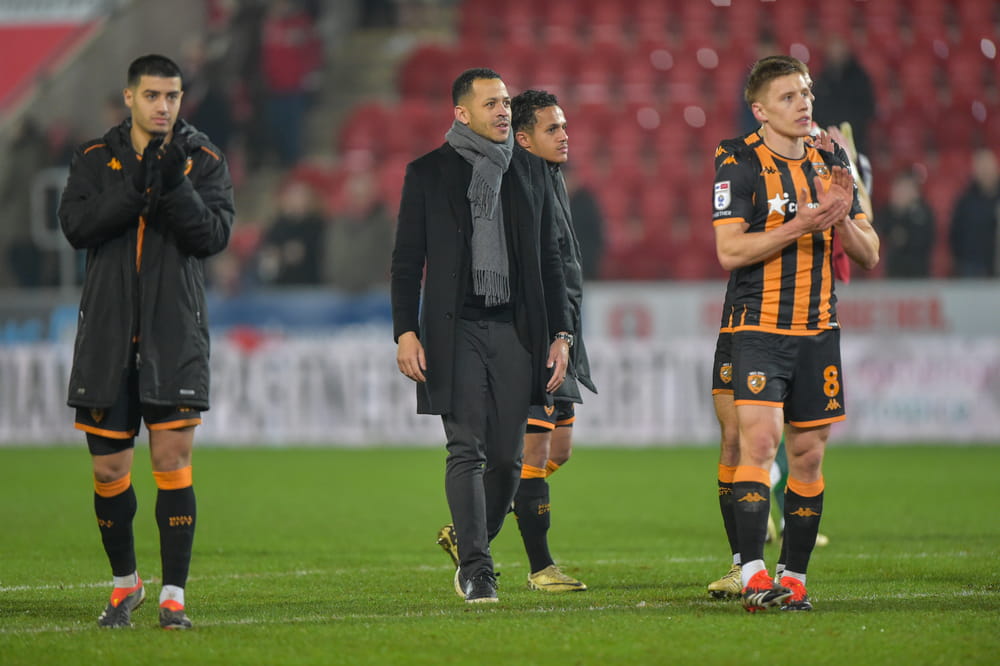
The same summer Rosenior headed to France to take on the vacant head coach spot at RC Strasbourg. His first season had some ups and downs, and ended in a mid-table finish.
Rosenior gained credit for his youth development record, continuing on from his positive work in this department at Hull City (where young loanees like Liam Delap and Fabio Carvalho made a big impact).
When Rosenior departed the club in January 2026, Europa League qualification was very much on the cards. Crucially, the positive results accrued under Rosenior hinged on an attacking brand of football that Chelsea’s owners will be expecting the 41-year-old to replicate in London.
Liam Rosenior Tactics Explained
Liam Rosenior always aims to implement a possession-oriented game, encouraging defenders to build up play from the back and absorbing the goalkeeper into a backline designed to patiently generate chances from deep.
During his time in charge of Strasbourg in the first half of the 2025/26 season, Rosenior’s team played fewer long passes than any other club in Europe’s top five leagues; instead, defenders patiently bounced the ball around, with lots of short passes in their own half, before feeding the ball into midfield where playmakers would look to exploit spaces in behind with clever second and third passes.
However, Rosenior isn’t strictly wedded to a particular vision, and there is certainly a degree of flexibility in the way he looks to operate.
Speaking to The Athletic FC back in October, Rosenior sketched out his coaching philosophy, explaining: “I don’t think there’s a right or wrong way to play football. You can dominate the game in many ways. To have the ball is great but you can [also] dominate space and territory.”
For Rosenior, domination can also be shown in zonal defensive solidity, or superiority on set plays, a vision that is in keeping with a wider recent shift in the Premier League towards more direct, aggressive systems rather than the ‘death by passing’ approach that was previously more in vogue.
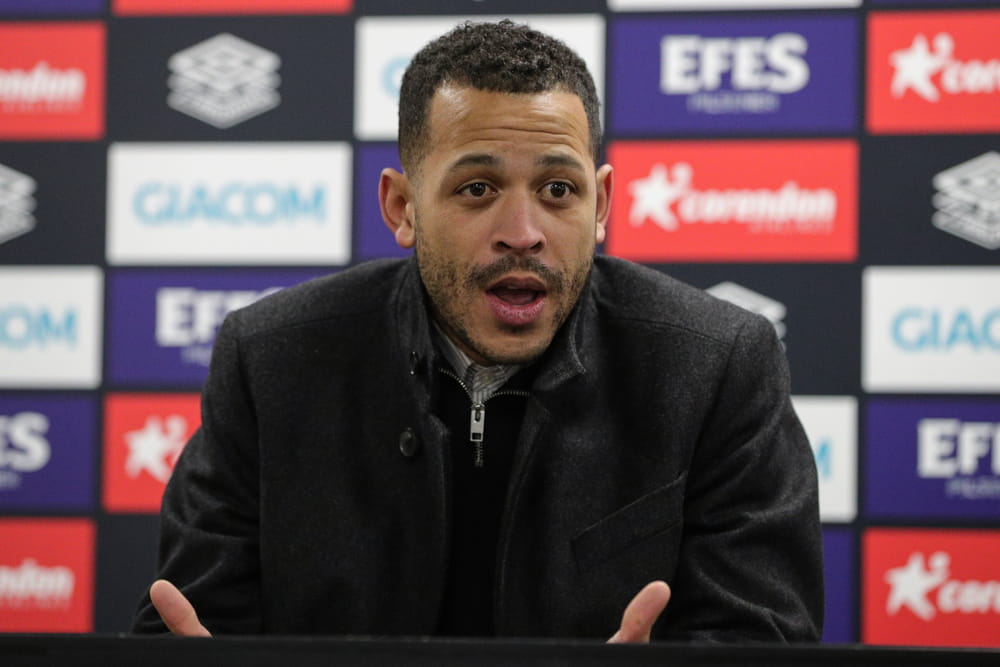
That being said, you’re unlikely to see his players parking the bus. After being defeated by French giants PSG in an entertaining 4-2 loss last season, Rosenior told the press: “I prefer to concede goals by trying something than by playing a low block and hoping not to concede.”
Since then, he’s explained further: “When I coach a team, I want my team to enjoy what they do. You have to love the game to make it, and normally to love the game you have to express yourself with the ball.
Pressing is an extension of that, pressing is trying to get the ball back as quickly as possible and to play with energy. I always want to see my team play with an enthusiasm and joy for the game.”
Aggressive pressing, with the intention of winning transitions in dangerous areas of the pitch, is a key part of the way Rosenior wants his teams to play.
When signing new players, the young coach always gives detailed individual presentations communicating the style of play and ensuring it’s a good fit personnel-wise.
His core team alongside him play a central role here: his right-hand man Kalifa Cisse has a dual role as assistant coach and translator, and while he’s an expert in culture and communication, fellow assistant Justin Walker focuses more on player development, backed up behind the scenes by Ben Warner, who Rosenior has described as “the best analyst in the world”.
This team will be essential to Rosenior if he’s to succeed at Chelsea.
The Strengths of Rosenoir’s Style of Play
So far in his coaching career, Rosenior has demonstrated plenty of tactical flexibility, which represents one of his key strengths in the ever-changing modern game.
There’s flexibility in terms of the formation he likes to play; he’ll usually set up with either a 3-4-2-1 or a 4-3-3 shape, and in either formation, defenders are encouraged to build up from the back, although there’s freedom to switch to a more direct style when the situation arises.
Out of possession, he likes to press with intensity, and in the early part of the 2025/26 season, this garnered impressive results, with Strasbourg recording 82 high turnovers by mid-October, second only to PSG, as well as 94 press sequences and 235 defensive actions (the second-highest in the league, and a key indicator of a desire to win possession early).
If Rosenior’s Chelsea can press with this much intensity and consistently win the ball in dangerous territories, you’d back attackers like Cole Palmer, Pedro Neto, and Alejandro Garnacho to finish the chances they create.

While this out-of-possession philosophy is likely to excite fans, Rosenior’s in-possession ideals will be perhaps even more intriguing to tactics-loving neutrals. “Rosenior has great in-possession ideas,” explained The Athletic’s Jon Mackenzie recently on the Tifo Football Podcast.
“He feels to me a bit more De Zerbi-coded maybe than Maresca was, so a lot more about possessing the ball deeper and having these tempo shifts and more direct attacks when you have that space that opens out.”
Here, Mackenzie refers to the patient style of play De Zerbi has implemented at clubs like Brighton, where centre-backs would often stand on the ball, baiting the opposition press, before playing quick, direct, well-timed passes into midfield and breaking the opponent’s lines with precision.
Another key strength that should translate well to the Premier League is Rosenior’s team’s quality from set pieces. Strasbourg scored more goals from corners than any other Ligue 1 side last season, and conceded the joint-fewest too.
With sides like Arsenal showing how important set plays can be in the modern game, this is likely to be a real positive for Chelsea in the new era.
The Weaknesses of Rosenoir’s Style of Play
With a team that plays a press-baiting possession game similar to that pioneered by Roberto De Zerbi, there’s a big question when it comes to breaking down opposition defences that don’t press.
This style of play can work for underdog teams who are regularly facing sides that want to press and win the ball off them, but it may not translate to a big Premier League outfit that are expected to dominate games.
Firstly, when teams sit back in a low block, Rosenior’s side will have to find a way to break them down, perhaps relying a little more on creative genius from individual players rather than a more systematic approach.
Secondly, at a huge club like Chelsea where fans expect their team to dominate games, supporters are more likely to become disgruntled if the head coach is not seen as being front-footed and dynamic, and that can be a risk with this patient possession-based style.
Thirdly, this particular way of playing out from the back comes with risks; centre-backs in particular are in danger of losing the ball in circumstances that can look calamitous, so there needs to be faith in the system and an acceptance that things might occasionally go wrong. At Chelsea, patience is a virtue that’s often in short supply.

In addition, the out-of-possession demands of the Premier League are so high that Rosenior might struggle to be able to press with the aggression and intensity he wants to.
The French top flight, while of an extremely high quality, doesn’t quite match up to the physical level of the Premier League, and Rosenior may find that the opponents he’s facing are better equipped to deal with the style of pressing he wants to pursue.
There’s also a very limited sample size to look at in terms of Rosenior’s career so far, with the Englishman having managed roughly 150 senior games in total. And it’s worth considering the importance of the multi-club ownership model that both Chelsea and Strasbourg operate under.
Given how these structures are highly compartmentalised in order to ensure personnel changes don’t disrupt the overall multi-club vision, it can sometimes be hard to judge the precise level of individual coaches within the system.
While Rosenior’s communication with players, fans and the media is generally very good, at times he can be seen as outspoken, and with Maresca’s off-field volatility widely assumed to be a key reason for his downfall, it’s worth noting that if Rosenior does clash with the Chelsea top brass, it’s not likely to go down well.
Still, his familiarity with the BlueCo structure means he’s likely to be skilled at managing the club’s hierarchies.
The multi-club ownership model that Chelsea, Strasbourg and Rosenior represent has come under intense scrutiny lately, with commentators like The Athletic’s Seb Stafford-Bloor critiquing the fact that Strasbourg are now “subservient to Chelsea, they no longer exist to achieve things in football but to promote talent to the parent club.”
To better understand this huge development within the world of football, check out our guide to the rise of multi-club ownership groups.

Author: Fred Garratt-Stanley
Lead Content Writer
Fred Garratt-Stanley is an experienced football writer and journalist, specialising in industry insights, tactical analysis, and the culture of the game. He has contributed to publications such as NME, GQ, The Quietus, and Resident Advisor. As Lead Content Writer at Jobs In Football, he focuses on providing reliable, research-driven articles to help people navigate careers in the football industry.


Related Articles

Andoni Iraola Tactics Explained