Soccer Positions: All 11 Roles Explained (2026 Guide)

Soccer Positions: All 11 Roles Explained (2026 Guide)
Sport never stands still for long. The game of football (soccer in North America) is constantly evolving, as coaches, tacticians, and players seek to find new ways to gain a competitive edge over their rivals.
One of the critical areas where football teams gain advantages is through tactical flexibility and formation innovation. Understanding soccer positions and their tactical nuances has become essential for players, coaches, analysts, and fans alike.
Modern football has transformed how we think about positions. Where once roles were static and clearly defined, today's game demands versatility.
Players must understand not just their primary position but how to adapt when formations shift, when the team transitions from defence to attack, and how to fulfil multiple responsibilities within a single role.
This comprehensive guide walks you through every major soccer position, the skills required, tactical variations, and how elite players embody these roles at the highest level.
Whether you're a footballer looking to understand your role better, a coach developing your team's tactical system, or simply a fan wanting deeper insight into the game, this guide provides the expert knowledge you need.
How Many Soccer Positions Are There?
There are 11 positions per team in a football match, occupying 4 main functional areas:
- Goalkeeper – The specialist defensive role
- Defence – Centre-backs and full-backs protecting the goal
- Midfield – The engine room connecting defence and attack
- Attack – Forwards tasked with creating and scoring goals
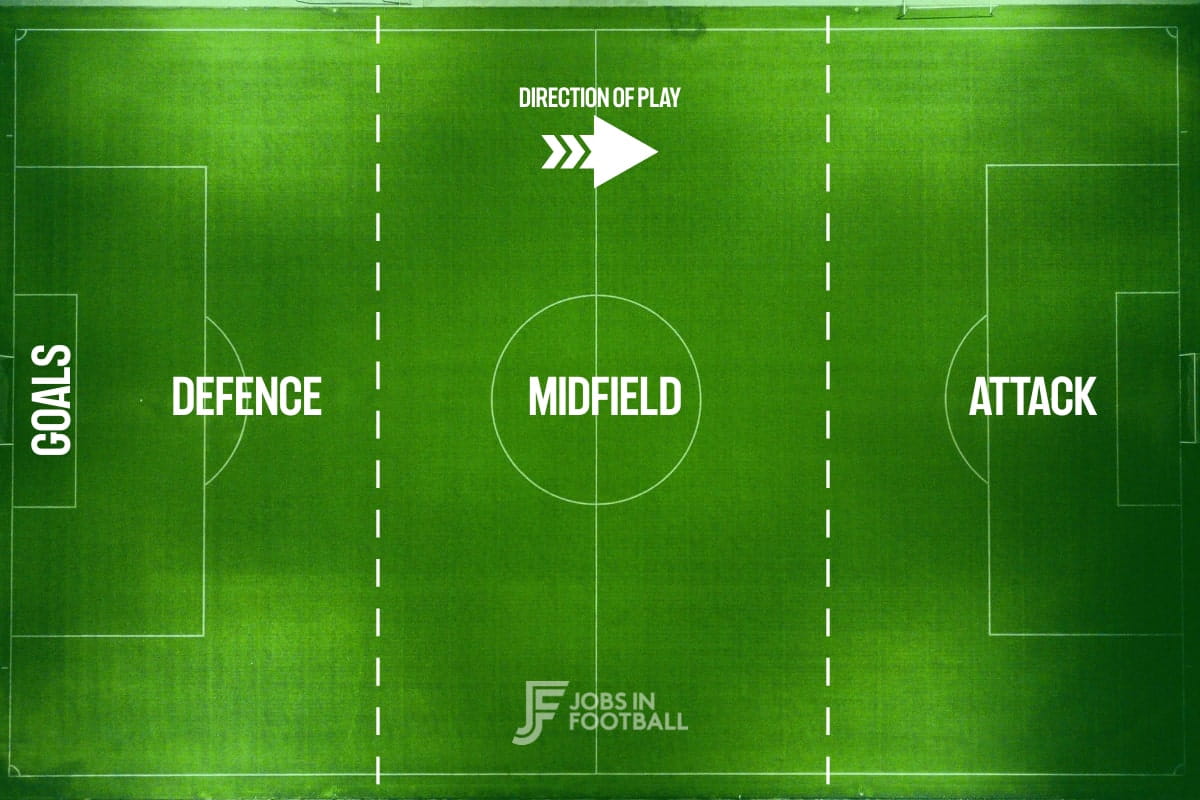
The exact positions and their responsibilities vary dramatically depending on the formation played. In a traditional 4-4-2 formation, you'll typically see:
- 1 Goalkeeper
- 2 Centre backs flanked by 2 Full-backs (Right-back and Left-back)
- 4 Midfielders (often 2 Defensive, 2 Attacking or 2 Wide Midfielders and 2 Central)
- 2 Forwards (typically a primary Striker and a Second Striker or Inside Forward)
In more attacking formations like 3-4-3 or 4-2-3-1, the positional structure becomes more fluid. Wing-backs might assume more attacking responsibilities, centre-backs drop deeper, and additional attacking midfielders create more offensive threats.
The Position Hierarchy: Understanding Formation Context
Understanding positions requires understanding formations. A player's role changes significantly based on the system around them. A right-back in a defensive 4-3-3 setup will prioritise covering their flank and supporting the centre-backs. The same player in an attacking 4-2-3-1 might push forward frequently to create numerical advantages on the wing.
Complete Guide to Soccer Positions
Goalkeeper (GK)
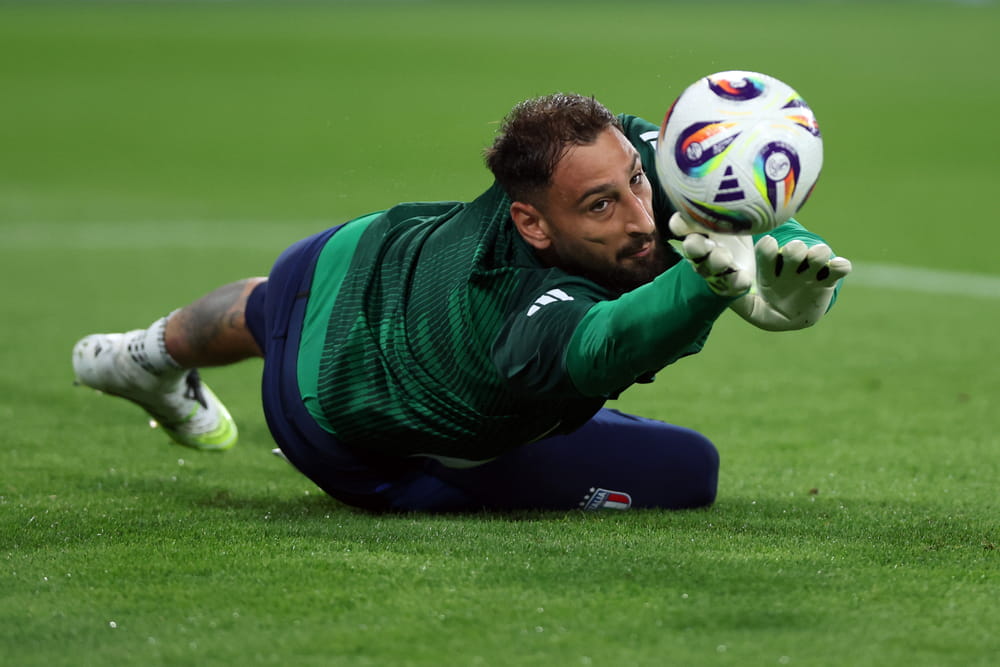
The goalkeeper is the final line of defence and occupies a unique position in football. Unlike outfield players, goalkeepers have specialized skills, training protocols, and physical attributes. This is why goalkeepers and outfield players train separately at professional clubs.
Primary Responsibilities:
- Preventing opposition shots from entering the goal
- Commanding the penalty area and distributing the ball
- Acting as the team's sweeper in modern possession-based football
- Managing pressure and maintaining composure in high-stakes moments
Key Skills Required:
Shot-stopping and Positioning – Modern goalkeeping is as much about anticipation and positioning as reflexes. Elite keepers like Alisson or Manuel Neuer read the game, position themselves to reduce shooting angles, and make saves look routine through smart positioning rather than spectacular reaction saves.
Catching and Handling – The ability to catch high balls under pressure from attacking players is critical. Goalkeepers must be confident catching crosses, back-passes, and shots in various conditions. Clean handling reduces rebound chances and stabilises play.
Distribution and Footwork – In the modern game, goalkeepers function almost as additional midfielders. Teams like Manchester City expect their goalkeeper to be comfortable playing with their feet, distributing long passes, and initiating attacks from the back. Ederson's contribution to City's possession-based football is as important as his shot-stopping.
Communication and Leadership – The goalkeeper has the best view of the entire pitch. Commanding the defence, calling offside traps, and organising the back line are essential skills. Great goalkeepers like Petr Cech were known for their leadership as much as their shot-stopping.
Reflexes and Agility – While not everything in goalkeeping, quick reflexes and the ability to move explosively across the goal remain vital. Saving one-on-one situations and reacting to deflections require elite athleticism.
Psychological Resilience – Goalkeeping has significant mental demands. Mistakes often result in goals. Recovery, concentration, and the ability to bounce back from errors distinguish the best from the rest.
Common Goalkeeper Terminology:
- Goalie / Goaltender
- Shotstopper
- Keeper / Number 1
Defensive Positions
Centre-Back / Centre-Half (CB)
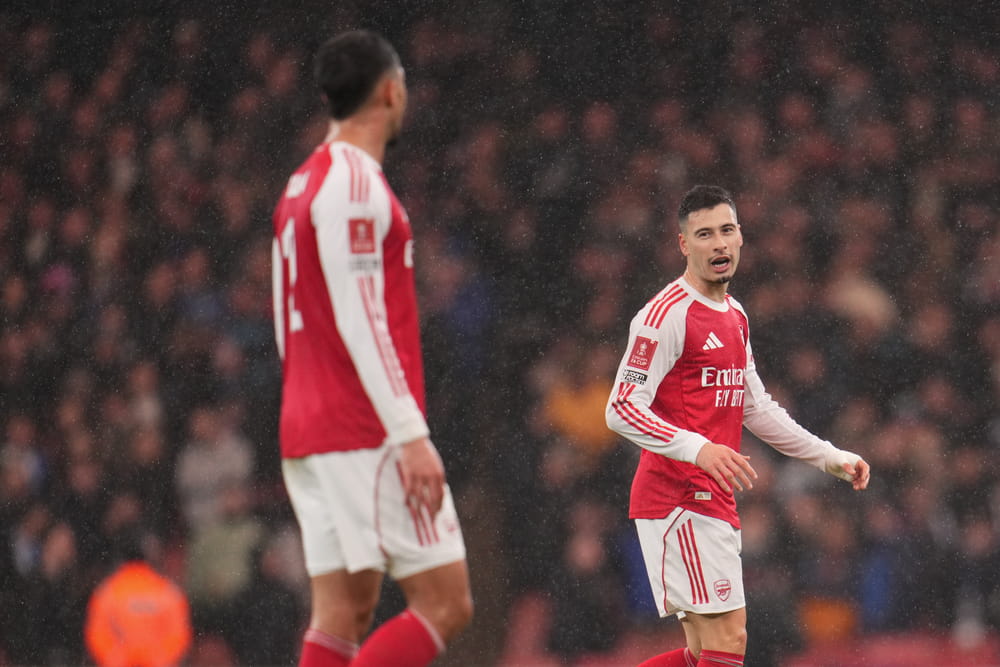
Centre-backs are the primary defensive unit, tasked with preventing opposition strikers from getting in behind and creating goalscoring opportunities. The position has evolved dramatically over the past decade. Modern centre-backs are expected to be ball players capable of playing out from the back under pressure, not just physical defenders who win aerial duels.
Most teams use either 2 centre-backs (in a back four) or 3 centre-backs (in a back three or five). The positional requirements shift depending on this choice.
Primary Responsibilities:
- Preventing opposition forwards from scoring
- Winning the ball in defensive areas
- Progressing possession forward to midfield
- Organising the defence and communicating positioning
- Managing aerial threats
Key Skills Required:
Positional Awareness and Reading the Game – The best centre-backs don't need to make constant sliding tackles because they position themselves perfectly. They anticipate where the ball will go, understand striker movement patterns, and stay a step ahead. Virgil van Dijk exemplifies this—he makes defending look easy because he's always in the right position.
Aerial Dominance – Centre-backs must be commanding in the air. Winning headers from crosses, defending set pieces, and attacking the ball at corners are core responsibilities. Physical presence and timing are crucial.
Composure Under Pressure – Modern football means defenders are pressed by attackers immediately upon receiving the ball. Being calm, accurate with passing, and quick to decision-making are essential. Poor centre-backs panic and lose the ball in dangerous areas. Great centre-backs like Rúben Dias are comfortable under extreme pressure.
Tackling and Aggression – Clean, well-timed tackles are crucial. This requires knowing when to hold position and jockey the opponent and when to commit to a tackle. Reckless, poorly-timed tackles result in fouls and red cards. Controlled aggression is the sweet spot.
Ball-Playing Ability – Playing out from the back has become non-negotiable at elite clubs. Centre-backs must control the ball under pressure, distribute accurately, and sometimes drive forward with the ball. This is why defenders like John Stones and Matthijs de Ligt command significant transfer fees.
Leadership and Communication – The centre-back pairing is the defensive bedrock. Clear communication, decisive leadership, and the ability to instruct teammates create a cohesive defensive unit.
Variations of the Centre-Back Role:
The Stopper – A more traditional, defensively-focused centre-back who prioritises stopping opposition attacks. Typically pairs well with a more ball-playing centre-back.
The Ball-Playing Centre-Back (Libero/Sweeper) – A centre-back who operates slightly deeper and emphasises ball progression. Franz Beckenbauer revolutionised the position with this approach. Modern examples include John Stones and Aymeric Laporte.
The Aerial Specialist – A centre-back who excels at set pieces and aerial duels. Height and timing are paramount.
Common Centre-Back Terminology:
- Central Defender
- Centre-half
- The Number 4 or 5
Full-Back / Wing-Back (FB, LB, RB, LWB, RWB)
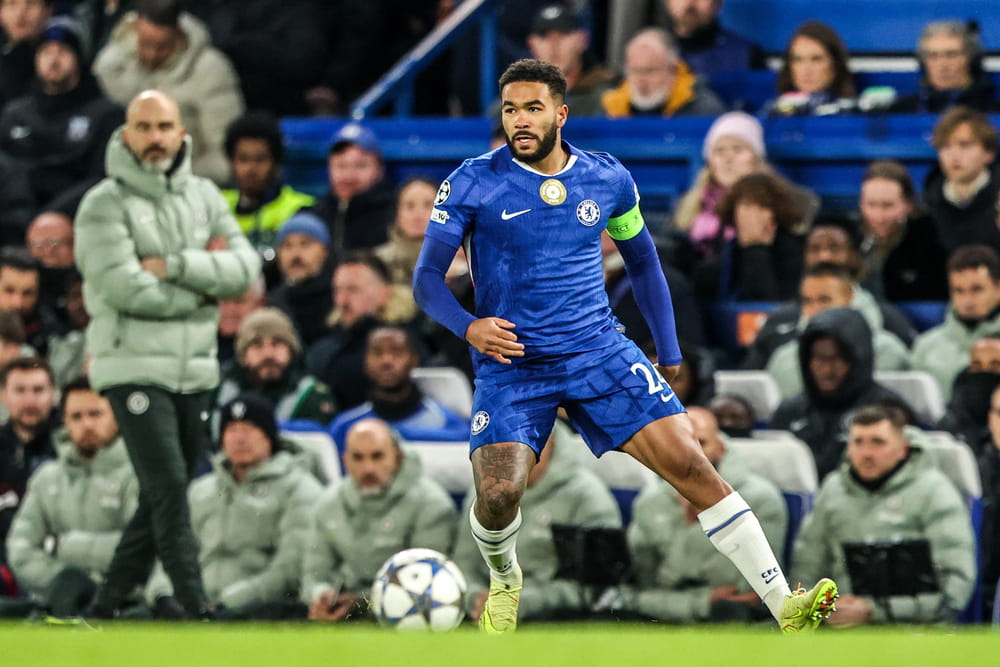
Full-backs defend the wide areas of the pitch, sitting either side of the centre-backs. In modern football, they're often among the most important attacking players on the team. The evolution of the full-back position is one of football's most significant tactical shifts.
Traditional Full-Back vs. Modern Full-Back:
A traditional full-back primarily defends and provides occasional attacking support. Modern full-backs (especially in possession-dominant teams) spend significant time in advanced attacking positions, creating overloads and delivering crosses. Liverpool's Trent Alexander-Arnold and Andrew Robertson are perfect examples—they're expected to contribute 5-10 assists per season.
Primary Responsibilities:
- Defending against opposition wingers and inside forwards
- Preventing crosses and cutting off attacking opportunities
- Providing width in the attacking phase
- Overlapping with wide midfielders to create attacking advantages
- Covering centre-backs when they move out of position
Key Skills Required:
Speed and Acceleration – Full-backs must recover pace to deal with fast wingers. While pure speed matters, explosive acceleration over 5-10 yards is more important for closing down attackers and recovering when caught out of position.
Positional Awareness and Defensive Shape – Without excellent positioning, centre-backs are exposed. Full-backs must switch from attacking to defending instantly and maintain defensive shape when their team is under pressure.
Stamina and Work Rate – Modern full-backs run 10-12km per match. They transition constantly from defensive actions to attacking support, requiring exceptional fitness. The physical demands of the position have increased dramatically.
1v1 Defending – Full-backs face skilled wingers regularly. Technical 1v1 defending skills—jockeying, timing tackles, using the body positionally—are essential. Kyle Walker's 1v1 defending remains elite despite being in his mid-30s.
Attacking Contributions – Modern full-backs must deliver quality crosses, make smart overlapping runs, and contribute to chance creation. This requires technical skill, football intelligence, and creative thinking. Trent Alexander-Arnold's ability to play incisive passes elevates his value significantly.
Tactical Flexibility – Full-backs must adapt to different systems. In a 3-5-2, they become wing-backs with more attacking freedom. In a defensive 4-4-2, they're more conservative. This flexibility is increasingly important.
Variations of the Full-Back Role:
Wing-Back (LWB, RWB) – Used in formations with three centre-backs (3-5-2, 3-4-3), wing-backs have more attacking responsibility and freedom. They cover more ground and operate higher up the pitch than traditional full-backs. This suits attack-minded players who have the stamina for the role.
The Attacking Full-Back – Modern full-backs who operate almost as wide midfielders. Teams like Manchester City and Liverpool use full-backs as primary attackers on the flanks.
The Defensive Full-Back – A more conservative approach, prioritising defensive solidity over attacking contributions. Useful against highly threatening opposition wingers.
Common Full-Back Terminology:
- Right back (RB) / Left back (LB)
- Defender
- Fullback
- Wing-back (in a back three system)
Midfield Positions
Centre-Midfielder (CM, DM, AM, CDM)
Centre-midfielders form the engine room of the team, connecting defence and attack. The position encompasses diverse roles, from defensive anchors to creative playmakers. Modern football has created several distinct centre-midfield archetypes.
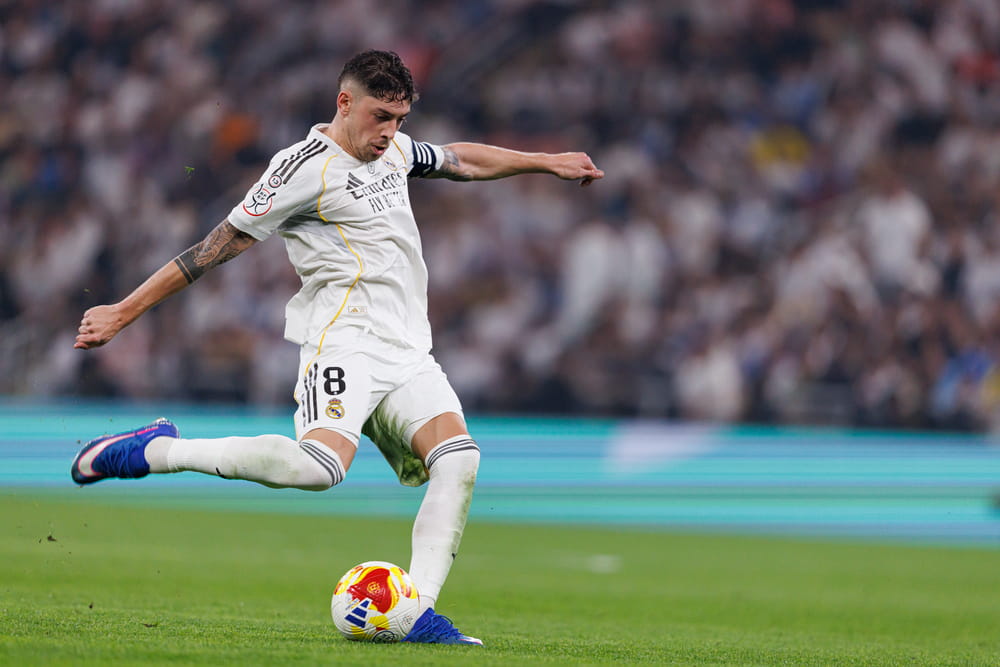
Centre-Midfielders typically fall into these categories:
The Defensive Midfielder (CDM/Holding Midfielder) – Sits deeper, focusing on protecting the back line and breaking up opposition attacks. Think N'Golo Kanté or Casemiro. These players are crucial to team structure.
The Box-to-Box Midfielder – Covers the entire field between boxes, combining defensive and attacking responsibilities. Requires exceptional fitness and versatility. Bruno Fernandes plays this role with attacking emphasis; Roy Keane famously excelled with defensive emphasis.
The Attacking Midfielder (CAM) – Focuses on creativity, scoring, and assists. Sits higher up, linking midfield with forwards. Typically provides 5-15 goals and assists per season. Example: James Maddison.
The Number 8 – A modern, fluid midfielder role popularised by players like Kevin De Bruyne. Combines B2B running with creative freedom, often operating in advanced positions.
Primary Responsibilities (vary by archetype):
- Controlling tempo and pace of play
- Protecting the back line and breaking up opposition attacks
- Transitioning the ball from defence to attack
- Providing numerical superiority in midfield
- Creating chances and scoring goals (depending on archetype)
- Pressing and pressing triggers
Key Skills Required:
Passing Range and Accuracy – Centre-midfielders constantly make different types of passes: short 5-yard passes, long 40-yard switches, through balls, diagonal passes. Accuracy under pressure distinguishes great midfielders. Passing completion rates above 85% are standard at elite level.
Ball Control and First Touch – Receiving the ball under pressure requires excellent control. Poor control results in turnovers in dangerous areas. Modern midfielders must be comfortable receiving with their back to goal and turning quickly.
Positional Discipline – Defensive midfielders must maintain discipline and shape. Wandering out of position leaves the back line exposed. The best DMs read the game and position proactively.
Energy and Movement – Box-to-box midfielders must make constant runs both defensively and offensively. Endless energy and intelligent movement (not just running aimlessly) are crucial.
Dribbling and Quick Feet – The ability to evade pressure with quick touches or creative dribbling opens passing options and creates space for others.
Tackling and Pressing – When the team doesn't have the ball, active pressing and well-timed tackles are essential. Jude Bellingham's pressing intensity is a key part of his value at Real Madrid.
Visual Awareness – Understanding what's happening across the pitch, anticipating movement, and seeing passing options before defenders react.
Variations of the Centre-Midfielder Role:
The Double Pivot – Two defensive midfielders (typically CDMs) sitting deep to shield the back four. Examples: Busquets and Rakitic at Barcelona, or Rodri and Gündogan at Manchester City. Provides defensive stability.
The Free Number 8 – A midfielder with attacking licence and freedom. Kevin De Bruyne is the archetype—he receives the ball everywhere and has creative freedom to attack or defend as situations demand.
The Press Trigger – A midfielder whose job includes initiating high pressure. Bruno Fernandes and Jude Bellingham excel at this, pressing opposition defenders aggressively to win the ball in advanced areas.
Common Centre-Midfielder Terminology:
- Central Midfielder (CM)
- Defensive Midfielder (DM)
- Holding Midfielder
- Box-to-box Midfielder
- Attacking Midfielder (AM)
- Playmaker
- The Number 6, 8, or 10
Wide Midfielder / Winger (LM, RM, LW, RW)
Wide midfielders operate on the flanks, responsible for both defensive cover and creating attacking opportunities. The position has become increasingly attacking-minded in modern football, though defensive responsibilities remain.
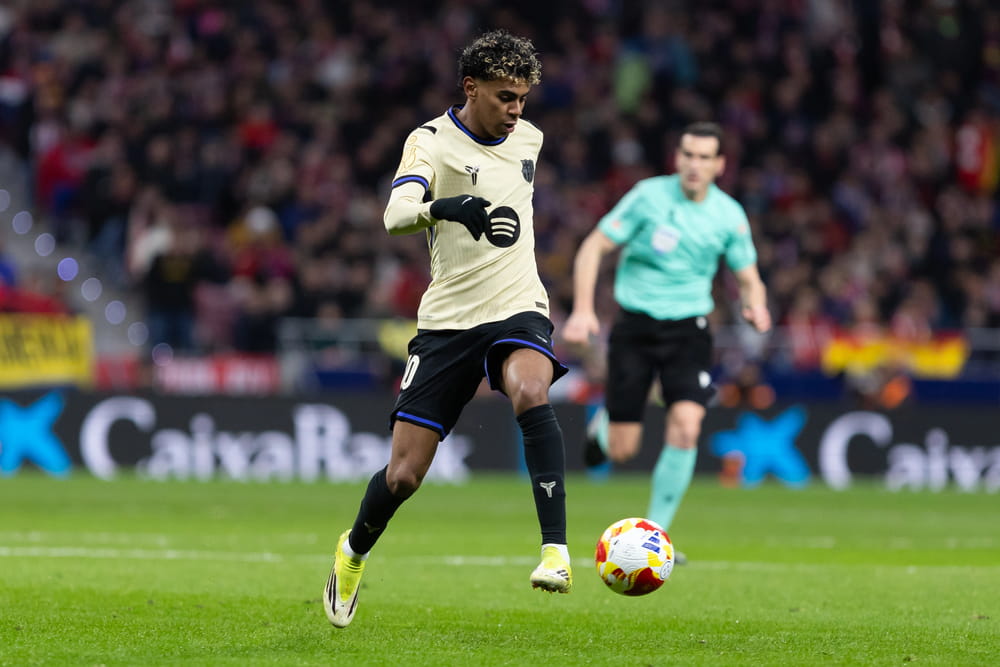
Primary Responsibilities:
- Creating attacking opportunities through crosses, dribbling, and cutbacks
- Pressing opposition full-backs and wide defenders
- Providing width to stretch opposition defences
- Tracking back to support full-backs
- Getting into goalscoring positions (especially more attacking-minded wingers)
Key Skills Required:
Technical Ability and Ball Mastery – Wide players are often among the most technically gifted on the team. Controlling the ball at pace, dribbling past defenders, and delivering crosses require exceptional technique. Players like Vinicius Jr. and Bukayo Saka are marvels of technical skill.
Pace and Explosiveness – The ability to beat defenders in one-on-one situations often comes down to pace. Quick acceleration over 5-10 yards is more important than pure top-end speed.
Crossing and Delivery – Creating chances for strikers requires quality crossing. Different types of crosses (low, high, early, late, driven) serve different purposes. Modern wide players also play cutbacks and short passes rather than just traditional crossing.
Shooting Ability – Modern wingers score significantly more goals than in past eras. Inverted wingers (right-footed players on the left, cutting inside) particularly rely on shooting ability. Mohamed Salah is the exemplar—he's as much a goalscorer as a creator.
Dribbling and One-on-One Ability – The ability to beat a defender one-on-one is invaluable. This might involve explosiveness, skill (chop and ball rolls), or intelligent movement.
Defensive Work Rate – Modern football demands that wingers defend. Pressing opposition full-backs, tracking runners, and covering the flank defensively are non-negotiable at elite level.
Variations of the Wide Midfielder/Winger Role:
The Traditional Winger – Stays wide, crosses frequently, and combines pace with technical ability. Less common in modern football.
The Inverted Winger – A right-footed player on the left flank (or left-footed on the right). Cuts inside to shoot. Modern football's dominant wide archetype. Examples: Salah, Sterling, Saka.
The Ball-Carrying Winger – Prioritises dribbling and 1v1 ability. Vinicius Jr. exemplifies this—his dribbling translates almost immediately into chance creation.
The Defensive Winger – A winger who prioritises defensive responsibility. Useful when the opposition has a threatening winger.
The Inside Forward – A winger who operates in more central areas, almost as a second striker. Combines wide support with goalscoring threat.
Attack Positions
Striker / Centre-Forward (CF, ST, #9)
The striker is the focal point of the attack. Their primary job is to score goals, but modern strikers contribute much more—pressing, combining play, creating for teammates, and holding the ball up.
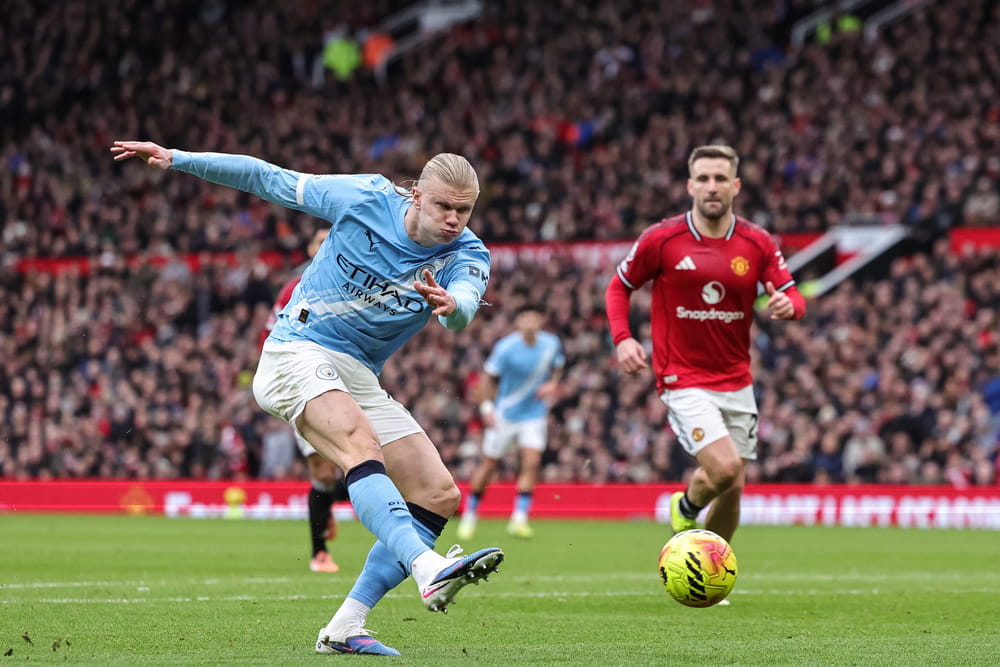
Primary Responsibilities:
- Scoring goals and converting chances
- Creating space for other attacking players through intelligent movement
- Pressing opposition defenders to win the ball high
- Holding the ball up for supporting players
- Heading and winning physical battles
- Reading the game and supporting midfield
Key Skills Required:
Shooting and Finishing – The ability to convert chances is paramount. This includes finessing shots into the corner, powering them past goalkeepers, timing headers, and executing difficult finishes. Erling Haaland's consistent finishing rate (over 60% shot conversion in many seasons) sets him apart.
Movement and Positioning – Elite strikers are constantly moving, finding space, and positioning themselves for goalscoring opportunities. This involves timing runs to beat offside, checking towards the ball, and finding pockets of space in crowded penalty areas.
Composure and Decision-Making – High-pressure situations demand calm execution. Poor strikers rush shots; great strikers take an extra touch if needed to create a better opportunity.
Physical Strength and Hold-Up Play – Modern strikers must hold the ball with their back to goal under pressure. Shielding the ball, waiting for support, and playing quick passes to teammates maintains possession and transitions the team forward.
Technical Ability – One-touch passing, close control, and dribbling in tight spaces are increasingly important. Harry Kane's technical ability (for a striker) allows him to play as a playmaker, sometimes dropping to midfield.
Pressing and Intensity – Robert Lewandowski and Luis Suárez are legendary not just for goalscoring but for their relentless pressing. Winning the ball high up the pitch is a significant contribution.
Intelligent Positioning – Understanding where to be at different moments of play. Anticipating where the ball will go and being in the right position requires football intelligence and experience.
Variations of the Striker Role:
The Classical Number 9 (Centre-Forward) – A traditional centre-forward who leads the line and is the primary target for balls into the box. Typically tall, strong, and aerially dominant. Diego Costa exemplified this, as does Olivier Giroud.
The Second Striker / Inside Forward – Operating slightly deeper than the main striker, the second striker links play with midfield and forward. Often more technical than the main striker. Roberto Firmino famously played this role despite being listed as a 9.
The False 9 – A striker who drops into midfield, occupying centre-back space and creating attacking opportunities through intelligent positioning. Lionel Messi revolutionised this role. Modern players like Jürgen Klopp's strikers often play false 9-like movements.
The Target Man – A tall, physical striker whose role is to win the ball, either through headers or 1v1 situations, and link play with supporting players. Serves as an outlet for direct play. Zlatan Ibrahimović combined this with elite technical ability.
The Inverted Striker – A false winger operating as a striker. Right-footed on the left, cutting inside to shoot. Less common than the inverted winger but used occasionally.
Common Striker Terminology:
- Number 9 / The Striker
- Centre-forward
- Target man
- Poacher
- Finisher
- False 9
Inside Forward / Second Striker
The inside forward (sometimes called a second striker or left striker/right striker) sits between the main striker and supporting midfielders. This role is crucial in modern football, though terminology varies by team and region.
Primary Responsibilities:
- Supporting the main striker with assists and chance creation
- Creating space for others through intelligent movement
- Pressing opposition defenders to trigger attacks
- Scoring goals and contributing assists
- Linking midfield with attack
- Playing as a 10-like figure (without the defensive responsibilities of a traditional attacking midfielder)
Key Skills Required:
- Technical ability and close control (to operate in tight spaces)
- Passing range and chance creation
- Movement and positioning
- Some goalscoring threat
- Positional flexibility (can operate across the front line)
Understanding Positional Abbreviations
Modern football uses standardised positional abbreviations, especially in formation graphics and digital football management games. Here's a reference guide:
Goalkeeper: GK
Defenders:
- D (Generic Defender)
- CB (Centre-back)
- RCB / LCB (Right/Left Centre-back)
- RB (Right-back)
- LB (Left-back)
- RWB / LWB (Right/Left Wing-back)
- SW (Sweeper)
Midfielders:
- DM (Defensive Midfielder)
- CDM (Centre Defensive Midfielder)
- CM (Centre Midfielder)
- CAM (Centre Attacking Midfielder)
- RM / LM (Right/Left Midfielder)
- RW / LW (Right/Left Winger)
- AM (Attacking Midfielder)
- SS (Second Striker)
Forwards:
- CF (Centre-forward)
- ST (Striker)
- CF+ or IF (Inside Forward)
Positional Roles by Formation
How positions function varies dramatically by formation. Here's how key positions shift:
In a 4-3-3:
- Full-backs are more defensive
- Three midfielders provide structure
- Wingers combine attack and defence
In a 4-2-3-1:
- Two defensive midfielders shield the back line
- An attacking midfielder (10) creates chances
- Wide midfielders/wingers have more attacking freedom
In a 3-5-2:
- Wing-backs attack more than traditional full-backs
- Three centre-backs provide defensive stability
- Central midfielders have fewer to break up opposition attacks
In a 3-4-3:
- Wing-backs almost function as extreme attacking full-backs
- Three centre-backs and two midfielders create a solid defensive base
- Attacking players (including wing-backs) provide numerical attacking advantage
Frequently Asked Questions
What are the 4 main position categories in soccer?
Goalkeeper, Defence (full-backs and centre-backs), Midfield (defensive, central, attacking, and wide midfielders), and Attack (strikers and inside forwards). These four categories encompass the diverse roles on a football pitch.
What's the difference between positions in a 4-3-3 vs. a 4-2-3-1?
In a 4-3-3, three midfielders provide balanced structure with more fluidity. In a 4-2-3-1, two defensive midfielders create a more compact base, allowing more attacking freedom for the attacking midfielder and wingers. The 4-2-3-1 provides more defensive stability but can feel more compact going forward. The 4-3-3 offers more midfield fluidity but requires more defensive discipline.
What's the hardest position to play in football?
Goalkeeper is arguably the most specialised and mentally demanding position. One mistake directly results in a goal—the pressure is immense. However, centre-midfielders face relentless physical and tactical demands. Covering an enormous amount of ground, making constant decisions, and being involved in every phase of play makes central midfield exhausting and complex.
What positions score the most goals?
Strikers obviously score most, followed by attacking midfielders and inverted wingers. In modern football, full-backs increasingly contribute goals (typically via set pieces). The expected goals for a position varies hugely by team and tactical system.
How do positions change in a back 3 vs. a back 4?
With three centre-backs instead of two, the third centre-back often provides additional cover or ball-playing responsibility. Full-backs become wing-backs with more attacking freedom. Wide midfielders might become wingers more focused on creation. The entire defensive and attacking system adjusts.
What's the most important position on a football team?
Goalkeeper and centre-back partnerships provide the foundation. Without defensive stability, it's hard to win matches. However, modern football emphasises the playmaking midfielder (the creative hub) and the striker (the goalscoring focal point). The most important position is arguably the one that provides the biggest advantage to your team's tactical system.
How has the centre-back position evolved?
Centre-backs were once purely defenders focused on physical dominance and heading. Modern centre-backs are expected to play with their feet, progress the ball from the back, and operate almost as additional midfielders in possession. This has made technical ability a crucial attribute for defenders at elite level.
What's a playmaker in football?
A playmaker is a midfielder (often an attacking midfielder or centre midfielder) who creates chances for others. They have excellent vision, passing range, and creativity. Famous playmakers include Zinedine Zidane, Andriy Shevchenko, and modern examples like Kevin De Bruyne and Jude Bellingham.
Why do different teams use different positions?
Teams adopt formations and positional systems based on their personnel, opposition, tactical philosophy, and match situation. A team with exceptional wingers might play 4-3-3. A team with injury issues might adjust. Understanding your players' strengths and building a system around them is fundamental to tactical planning.
How important is positional flexibility in modern football?
Increasingly important. Players must understand multiple positions and adapt as systems change. The best modern players are positionally flexible. For example, Jude Bellingham can play attacking midfield, centre midfield, or even defence. This flexibility makes players more valuable.
Key Takeaways: Mastering Soccer Positions
Understanding positions requires understanding that modern football is fluid. While traditional roles still exist, the contemporary game demands tactical intelligence, physical capability, and technical skill from every player regardless of position.
The goalkeeper remains a specialist role but now requires ball-playing ability. Defenders must be comfortable in possession. Midfielders must cover enormous amounts of ground and make constant decisions. Forwards must press, link play, and create for teammates in addition to scoring.
Knowledge of positions—how they function, what they require, and how they evolve tactically—is essential for players seeking to improve, coaches developing systems, and fans gaining deeper appreciation for football's beautiful complexity.
Whether you're analysing formations, scouting talent, or simply understanding what happens on the pitch, this guide provides the framework to see beneath the surface of football. Positions aren't just static roles—they're evolving functions within tactical systems designed to maximise team performance and exploit opposition weaknesses.
For those interested in deepening tactical knowledge further, explore formation analysis, pressing systems, and how top coaches adapt positional requirements. Football is endlessly complex, and position-specific expertise opens doors to deeper understanding.
Careers in Football: Using Positional Knowledge
Understanding football positions deeply opens doors across a range of professional roles in the game:
- Coaches need to understand every position to design training sessions, build tactical systems, and develop players
- Analysts and scouts use positional profiling to identify recruitment targets — knowing exactly which attributes matter at each position is fundamental
- Sports scientists tailor conditioning programmes to positional demands (a winger's explosive speed work differs from a centre-back's strength programme)
- Football journalists and broadcasters who understand positions add depth and accuracy to their coverage
If you're pursuing a career in football, explore our Football Career Paths guide and browse current football jobs at Jobs In Football.
Related Resources
- Football Career Paths: From Player to Professional Roles
- How to Become a Football Scout
- How to Become a Football Analyst
- The Regista Role Explained
- The Mezzala Role Explained
- What Is the False 9 Position?
About the Author
This comprehensive guide to soccer positions was created with input from professional coaches, analysts, and players to ensure accuracy and relevance to modern football. Jobs In Football specialises in helping people understand careers in football, from playing through to coaching, analysis, and sports science roles.
Interested in a career in football? Explore career paths in football or learn about our career development service that helps aspiring professionals break into the industry.
Explore Specific Positions & Tactical Roles
Dive deeper into individual positions and tactical concepts that shape the modern game:
- The Role of the Deep-Lying Playmaker – How this specialist position dictates tempo from the base of midfield.
- The Target Man: Football Tactics Explained – Why the traditional target striker remains a potent tactical weapon.
- The Inverted Fullback – The modern defensive role that blurs the line between defender and midfielder.
- The Sweeper Keeper – How goalkeepers evolved into the last line of ball-playing defence.
- Best Soccer Formations – A complete guide to the tactical systems that define how positions interact.
- Gegenpressing Explained – The high-intensity pressing system that changed modern football.
- Total Football – The Dutch philosophy where every player can play every position.
- How to Become a Football Analyst – Turn your knowledge of positions and tactics into a career.