A Guide to the Minnows and Underdogs at the 2026 World Cup

Hosted in 16 cities across the United States, Canada, and Mexico, the 2026 edition of the FIFA World Cup is set to be the biggest and most ambitious tournament to date. Thanks to significant structural changes, for the first time 48 teams will be competing, 16 more than at the 2022 Qatar World Cup.
In the confederational qualifying rounds, there was fierce competition for those 16 additional spaces, and some huge shocks along the way. A variety of minnows and underdogs managed to achieve their first-ever World Cup qualification; in this article, we’ll be guiding you through those sides and what to expect from them this summer.
Six debutants and long-absent sides head into the 2026 FIFA World Cup as genuine underdogs: Curaçao (the smallest country ever to qualify, now led by 78-year-old Dick Advocaat — soon to be the oldest head coach in tournament history), Cape Verde (a first World Cup for the Atlantic archipelago), Panama (back after the 2018 thrashing by England), Haiti (first appearance since 1974), Uzbekistan (the first Central Asian nation to qualify), and Jordan (Asian Cup finalists making their World Cup debut).
The New World Cup Format Explained: Why Did FIFA Expand The Tournament?
The structure of the FIFA World Cup has been altered several times over the course of its 96-year history, but the changes made ahead of the 2026 tournament are arguably the most significant ever: the firmly cemented 32-team, eight-group format has been consigned to the history books, replaced by a tournament consisting of 48 teams, split into 12 groups of four teams.
There will be a total of 104 games, and an additional round of 32, which means the tournament finalists will play eight games for the first time.
In each group, the teams that finish first and second will progress to the knockout stages. In addition, the eight best third-placed teams will also reach the round of 32. FIFA has consistently claimed that this expanded format is all about offering playing opportunities to lower-ranked teams from across the world, and it certainly has done that, with a wide range of minnows and underdogs qualifying for the first time.
However, there has been criticism levelled at FIFA for the increased fixture congestion, risks to player welfare, and potential for a lower standard of tournament football created by this expansion.
Who Are The Biggest Underdogs at the 2026 World Cup?
The expansion of the tournament for the 2026 edition opened the door for several national teams that previously had little hope of qualifying. Some incredible stories emerged across the globe during the World Cup qualification process; below, we’ve rounded up the biggest underdogs who managed to make it to 2026.
| Team | Confederation | Group | Group opponents | Head coach | First match |
|---|---|---|---|---|---|
| Curaçao | CONCACAF | E | Germany, Ecuador, Ivory Coast | Dick Advocaat | 14 Jun vs Germany (Houston) |
| Cape Verde | CAF | H | Spain, Uruguay, Saudi Arabia | Bubista | vs Spain (Group H) |
| Panama | CONCACAF | L | England, Ghana, Croatia | Thomas Christiansen | vs England (Group L) |
| Haiti | CONCACAF | C | Brazil, Morocco, Scotland | Sébastien Migné | 13 Jun vs Scotland (Boston) |
| Uzbekistan | AFC | K | Portugal, Colombia, DR Congo | Timur Kapadze | vs Portugal (Group K) |
| Jordan | AFC | J | Austria, Algeria, Argentina | Jamal Sellami | vs Argentina (Group J) |
Curaçao
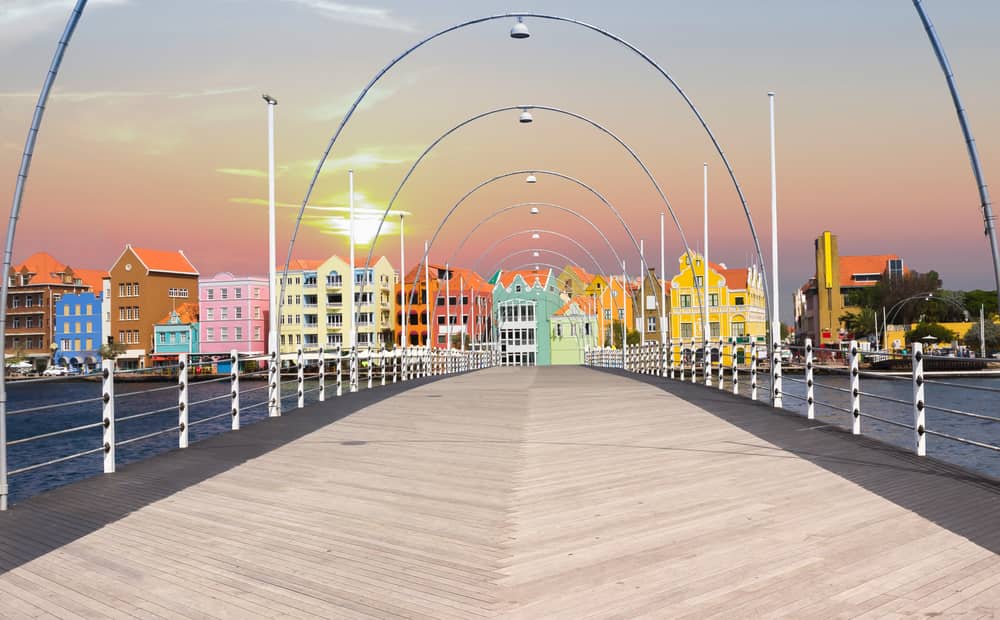
Occupying an area of roughly 170 square miles and with a population of just 155,000 (less than the city of Oxford), Curaçao is by far the smallest country to ever qualify for the World Cup. In qualification, they got over the line by securing a draw against Steve McClaren’s Jamaica team; the ex-England boss responded by handing in his resignation.
Many global football fans hadn’t even heard of Curaçao until this incredible accomplishment. It’s a unique country: an autonomous Caribbean island just north of Venezuela, and a former Dutch colony.
To this day, it remains part of the Kingdom of the Netherlands, and the vast majority of the squad were born and raised in the Netherlands. The country’s sports passport initiative played an integral role in elevating the level of the squad; it’s easy for Dutch citizens with Curaçaon heritage to get hold of a passport, meaning the tiny island has been able to attract a large number of talented overseas players who have benefited from improved infrastructure, resources, and coaching standards in the Netherlands.
Lots of effort went into making the international camps fun and rewarding for these diaspora players, who would be given a huge reception from fans each time they showed up on the island to play; evidently, this helped foster excellent team spirit.
Curaçao was also able to attract the attention of the extremely experienced Dutch coach Dick Advocaat, who has managed the Dutch national team on three occasions. Advocaat took charge in 2024 and masterminded the World Cup qualification campaign.
In February 2026, Advocaat stepped down to care for a family health issue, and Curaçao turned to fellow Dutch coach Fred Rutten — a former boss of Twente, PSV and Feyenoord — as his replacement. The handover did not go to plan: Rutten oversaw heavy warm-up defeats to Australia and China in March (Curaçao conceded seven goals and scored just one across the two games), and on 11 May 2026 he resigned with both squad and federation reportedly keen on a different direction.
The very next day, the Federashon Fútbol Kòrsou confirmed Dick Advocaat’s return to the dugout, making him the head coach who will lead Curaçao into their World Cup debut. At 78, Advocaat is set to become the oldest head coach in World Cup history, breaking Otto Rehhagel’s previous record by seven years (Rehhagel was 71 when he coached Greece at the 2010 tournament). It is also Advocaat’s third World Cup with a third different nation, having previously led the Netherlands in 1994 and South Korea in 2006.
Curaçao open their tournament against Germany on 14 June 2026 in Houston, before facing Ecuador in Kansas City on 20 June and Ivory Coast in Philadelphia on 25 June. With Group E containing three experienced World Cup sides, Advocaat and his players have their work cut out.
Cape Verde
In October 2025, Cape Verde secured a historic first World Cup qualification by beating Eswatini 3-0 to top a qualifying group that also included Angola, Libya, and five-time African Cup of Nations winners Cameroon.
A tiny archipelago republic in the central Atlantic, around 400 miles from the west coast of Senegal, Cape Verde joined both FIFA and the Confederation of African Football in 1982, and only entered World Cup qualifying 20 years later.
CAPE VERDE BECOME THE SECOND SMALLEST COUNTRY TO QUALIFY FOR A WORLD CUP 🇨🇻
— B/R Football (@brfootball) October 13, 2025
What a story 🙌
(w/ @LyesBouzidi10, @Culturecams) pic.twitter.com/fYFQB3VRNP
For a long time, they struggled to make a mark against bigger, better-resourced African competitors, but the expansion of the tournament and the creation of additional spots for African nations have favoured them massively: a record 10 teams from Africa will take to the field at the 2026 World Cup, and they've taken advantage of that increase.
Cape Verde is a former Portuguese colony with a population of around 525,000, meaning they’re the third-smallest nation to reach a World Cup after Curaçao and Iceland. Ranked 70th in the World, the men’s team has grown its continental presence in recent years, reaching the quarter-finals of the Africa Cup of Nations in 2013 and 2023 and taking advantage of diaspora players like the French-born Villarreal defender Logan Costa and national team stalwarts like 36-year-old former Nottingham Forest, Lille, and Le Havre winger Ryan Mendes, the country’s all-time leading goal scorer.
Since 2020, Cape Verdean coach (and ex-international) Bubista has been at the helm, offering stability and experience, and creating a great team spirit that has allowed Cape Verde to become more than the sum of its parts.
His 46.8% win rate as boss is impressive considering his side’s underdog status, and by steering Cape Verde to World Cup qualification, he did enough to win the CAF Coach of the Year award for 2025. Facing Spain, Uruguay, and Saudi Arabia in Group H, his team has a huge task on their hands at the World Cup; however, having toppled the likes of Cameroon and Ghana in recent years, they know they're capable of springing an upset.
Panama
England fans who witnessed their team’s 6-1 demolition of Panama at the 2018 World Cup will know that this isn’t the Central American nation’s first outing at the world’s biggest football tournament.
Panama return to the World Cup after a 3-0 win over El Salvador 🇵🇦 pic.twitter.com/4SljgvmFlj
— B/R Football (@brfootball) November 19, 2025
But don’t underestimate the power of that Panamanian World Cup experience; hungry, talented players like Houston Dynamo midfielder Adalberto "Coco" Carrasquilla, Marseille full-back Amar Murillo, imposing Norwich City centre-back Jose Cordoba, and experienced goalkeeper Luis Mejía will be desperate to build on those 2018 foundations and secure the country’s first-ever group stage points at a World Cup.
In the dugout is Thomas Christiansen, a Danish coach who’s been in charge since 2020 (making him Panama’s longest-serving head coach). His Spanish heritage and language skills have paid dividends, allowing him to communicate effectively with players and build a real sense of togetherness.
Christiansen’s squad will be tested to the full in North America this summer, though; Panama’s group consists of England, Ghana, and Croatia, three experienced nations (and two former World Cup finalists) who will be difficult to beat.
Haiti
It’s been over 50 years since Haiti qualified for the World Cup, with their only prior appearance coming at the 1974 edition of the tournament in West Germany.
Their qualification is even more remarkable when you consider the turbulent socio-political situation in Haiti right now: since 2021, the country, situated on the western side of the Caribbean island of Hispaniola, has been in the midst of what Amnesty International labels a ‘severe humanitarian crisis’, with the capital Port-au-Prince currently controlled by armed gangs, and thousands being killed each year across the country.
Haiti are going to their first World Cup since 1974 🇭🇹
— B/R Football (@brfootball) November 19, 2025
A 2-0 win over Nicaragua saw them fend off Honduras and Costa Rica ⭐️ pic.twitter.com/OBAQg5SL70
Due to this situation, Haiti hasn’t hosted an international fixture on home soil since 2021, and their French coach Sébastien Migné has never even been to the country; their qualification in this context arguably makes them the most impressive minnow of all.
There are some amazing personal stories in there too, from striker Don Deedson Louicius bagging several key goals in qualifying despite recently seeing his childhood home burned to the ground amid the violence in Haiti, to the revelation that goalkeeper Josué Duverger (who plays for German lower league outfit Cosmos Koblenz) will become the first footballer playing in the fifth tier to represent his country at the World Cup.
Drawn in Group C with Haiti are Brazil, Morocco, and Scotland: two recent World Cup semi-finalists and a nation that topped their UEFA qualifying group. It's a tough assignment, but regardless of results, the people of Haiti will be extremely proud to see their team represented at the world's biggest sporting event.
Uzbekistan
By qualifying for the 2026 tournament, Uzbekistan became the first country to represent the vast region of Central Asia at a World Cup. This isn't a region known for its footballing ability; settlements are sparse, and infrastructure can be lacking.
However, there are currently some top-quality Uzbek players operating at the highest level, most notably Manchester City defender Abdukodir Khusanov (the first Uzbek player to represent a Premier League club).
Uzbekistan qualify for their first World Cup, making them the 81st different nation to play in the tournament 🇺🇿 pic.twitter.com/sYOjEHxymb
— B/R Football (@brfootball) June 5, 2025
In the capital of Tashkent, huge celebrations erupted in June last year after a 0-0 draw with the United Arab Emirates secured Uzbekistan's World Cup entry. Having repeatedly come close to qualifying in recent years, they finally achieved that goal under the guidance of head coach Timur Kapadze, a legendary former international who racked up 119 caps for the men's national team.
In Group K, they’ll face up against Portugal, Colombia, and DR Congo, a difficult but not impossible lineup of teams; out of all these minnows, Uzbekistan arguably has the best chance of qualifying for the knockouts.
Jordan
Another team making their debut at the World Cup is Jordan, an Asian Confederation nation located on the northern Arabian Peninsula. This is a country with a solid footballing pedigree, underlined by their appearance in the final of the 2023 Asian Cup.
However, their qualification still came as a surprise, with Jordanian journalist Khaldoon Alshamayleh telling the BBC at the time: “It’s a dream for us, I never thought I would see this day."
While many Jordanian players ply their trade on home soil, like Rajaei Ayed of Jordanian Pro League side Al-Hussein, the inclusion of overseas-based talents like FC Seoul’s Yazan Al-Arab and Rennes forward Yazan Al-Naimat will add handy experience.
On the touchline is Jamal Sellami, a Moroccan coach who joined in 2024 after stints in the Moroccan national team's youth set-up, and led Jordan successfully through World Cup qualification. In Group J, they face Austria, Algeria, and Argentina.
Frequently Asked Questions
Which is the smallest country at the 2026 World Cup?
Curaçao, with a population of roughly 155,000, is the smallest country ever to qualify for a FIFA World Cup. The autonomous Caribbean island state — still part of the Kingdom of the Netherlands — secured its place by drawing 0-0 with Jamaica in November 2025, finishing top of its CONCACAF qualifying group. Iceland (around 390,000) had held the previous record before being surpassed in 2026.
Who will be the oldest head coach at the 2026 World Cup?
78-year-old Dick Advocaat of Curaçao will be the oldest head coach in FIFA World Cup history when the tournament kicks off. He breaks Otto Rehhagel’s previous record of 71 (Greece, 2010 World Cup) by seven years and becomes only the second man to lead three different nations at a World Cup, after previously coaching the Netherlands (1994) and South Korea (2006).
How many teams are playing at the 2026 World Cup?
48 teams are competing at the 2026 FIFA World Cup, up from 32 at the 2022 tournament in Qatar. The expanded field is split into 12 groups of four. The top two from each group plus the eight best third-placed sides progress to a new round of 32, meaning the finalists will play eight games rather than seven for the first time. Six nations — Cape Verde, Curaçao, Haiti (returning since 1974), Jordan, Panama and Uzbekistan — are widely viewed as the tournament’s biggest underdogs.
Which teams are making their World Cup debut in 2026?
Cape Verde, Curaçao, Jordan and Uzbekistan are all making their first-ever appearance at a FIFA World Cup in 2026. Haiti and Panama are returning after long absences (Haiti last appeared in 1974; Panama only debuted in 2018). Across the 48-team field, four debutant nations is one of the highest counts in tournament history — a direct consequence of the expanded format giving smaller confederation members more qualifying paths.
Want to find out more about the world's most prestigious football tournament? Check out our in-depth guide to the history of the World Cup trophy.