Fortuna For All: One Bundesliga Club's Revolutionary Approach To Match Tickets
Top-level football is becoming increasingly costly to watch live. These days, most Premier League clubs price their season tickets at around £500 per year minimum, while Arsenal, the club with the most expensive season tickets, charges a whopping £1,127.
Across Europe's other elite leagues, you'll find a similar story: watching a single game in La Liga or Serie A could easily set you back over €100, while the cheapest season ticket at Real Madrid's revamped Bernabeu Stadium costs €1,350.
In this context, the alternative direction taken by German football clubs is refreshing. Going to a German top tier game is typically significantly cheaper than a similar calibre of match in another of Europe's 'Big Five' leagues, with giants Bayern Munich charging just £143 for a season ticket last term.
Largely due to the unique 50+1 ownership structure in place across German football (which rules that all clubs must be controlled by a fan majority), Bundesliga games have remained relatively affordable for most supporters.
Even against this backdrop, there are clubs in Germany that have introduced additional measures to make sure that all fans are able to attend matches, regardless of their income. In this article, we'll be exploring a pioneering new method of keeping ticket prices down that has been introduced by an innovative club within the Bundesliga set-up.
Fortuna Düsseldorf : A Brief Introduction
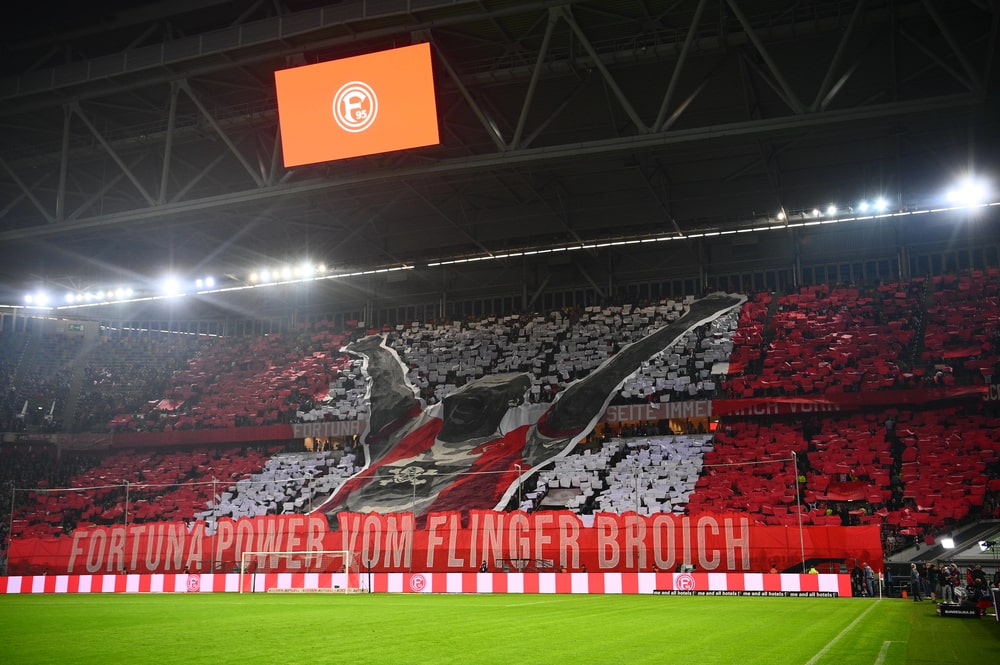
Founded in 1895, Fortuna Düsseldorf is one of the oldest professional clubs in Germany. Representing the large West German city of Düsseldorf, the club was a fixture of top-flight football throughout most of the 20th century, dominating the regional Gauliga Niederrhein under the Third Reich during the 1930s before establishing itself as a strong force post-WWII, winning a handful of honours, including back-to-back DFB-Pokal cups in 1978/79 and 1979/80.
After an extended top-flight stint in the late 1980s and early 1990s, the club slipped down the pyramid and began the early 20th century playing at a regional level and struggling financially. In recent years, Düsseldorf has been a solid second-tier club, with the occasional flirtation with the top flight (most recently in 2020).
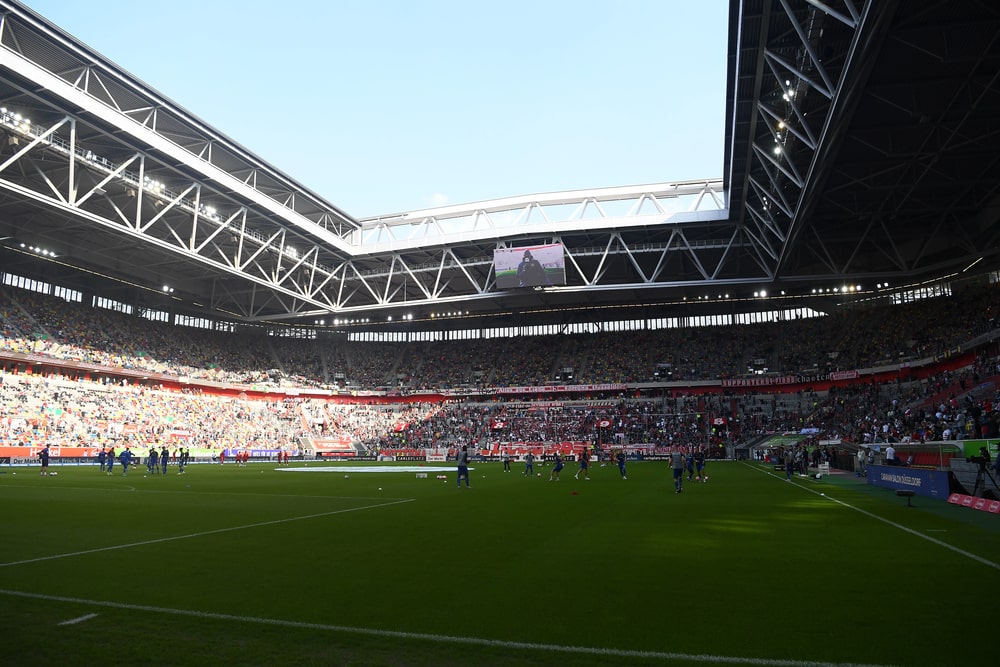
They play in the 47,000-seater Düsseldorf Arena, which was selected as a host stadium for Euro 2024. Still, it's off the pitch that they've been making the most headlines recently, cementing their reputation as a community-centred club with a knack for generating fan engagement.
Towards the end of the 2022/23 season, Fortuna Düsseldorf announced that the following campaign, they'd introduce free tickets for fans for certain matches. Starting with a limited number of games per season, supporters would have access to the stadium without having to pay a penny.
The scheme has been in place ever since, under the title 'Fortuna für alle', meaning 'Fortuna For All'.
What Is The Fortuna For All Free Ticket Scheme?
Fortuna For All is a pioneering scheme that gives all supporters free access to a select number of home matches at the Düsseldorf Arena (known for sponsorship reasons as the Merkur Spiel-Arena) each season.
For many football fans, the idea of gaining admission to a high-quality second-tier football match is extraordinary, but for Düsseldorf supporters, it has become a reality.
The scheme kicked off in October 2023 when the club hosted fellow 2. Bundesliga outfit Kaiserslautern in the first of three games across the 2023/24 campaign which both home and away fans could attend free of charge.
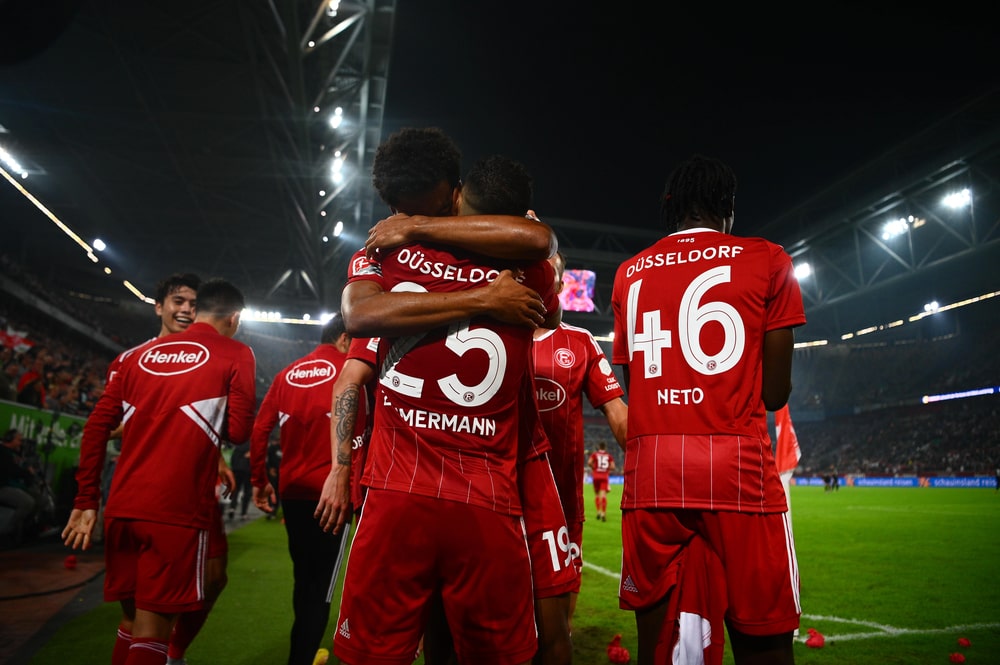
To gain admission, supporters applied using a general ballot system, and tickets were allocated randomly. There were reportedly 120,000 ticket requests for the first free match, a huge surge in demand that shows how big the market for free live football is (before this point, the club's average attendance was 33,459).
After this positive reception in 2023/24, Fortuna Düsseldorf decided to renew the scheme the following season, boosting the number of free games from three to four across 2024/25.
The aim is to eventually provide free access for every single league game, but things are understandably moving steadily; from 2025/26, the number of free games available will increase again to five.
According to club chairman Alexander Jobst, "the challenges in professional football are becoming bigger and bigger. It is becoming more difficult to reach a competitive balance, and we had to evaluate how we would reach our ambitions."
Fortuna For All is his side's way of addressing that imbalance; but what exactly do they hope to achieve?
What Is The Aim Of The Scheme?
On their official website, the club states that the goal of the scheme is "to enable top-league football in Düsseldorf again and to gather all Düsseldorf citizens behind the club." They add that Fortuna belonging to the fans "is non-negotiable for us… "Fortuna for all" relies on modern and digital forms of participation. We want to listen and shape things together. The club belongs to everyone who participates and contributes."
Fleshing out this broad statement, chairman Alexander Jobst told Forbes: "Our objective is to be a sustainable first-division club in the future. But we also want to be an independent football club driven by its members. It, therefore, was our objective to think of something new and to think about a business model that gives us a higher chance to get up to the first division and then to stay there."
So how exactly does letting fans in free of charge increase the chances of promotion to the top flight? First, it's important to note that the German 50+1 ownership model means it's difficult for the club to attract external investment.
By making games free to watch and effectively asking sponsors to cover the costs of those tickets, Düsseldorf have found a new way to bring in corporate revenue. Currently, the club brings in around €7-8 million ($7.7-8.8 million) per season through ticketing.
The Fortuna For All scheme asks sponsors to make up the revenue that would be generated by ticket sales on the selected games, in exchange for valuable brand exposure and association with a ticketing model designed to be profitable in the future.
"This is a pilot phase," explained Jobst. "We are convinced that we are going to acquire additional partners in the future as they will see this as an extraordinary concept. The more partners come on board to support 'Fortuna For All', the more free matches we can offer for the future…. With this concept, we feel we can reach a fundamental economic base from which we can grow."
Crucial to the model is in-stadium spending; the club reckon that by refusing to ask fans for ticket money, they free them up to spend more on food and merchandise on matchdays, with Jobst adding "we expect higher income from those pillars, with regard to the stadium, food, beverages, and merchandise".
How Are The Free Games Chosen?
According to the Bundesliga, Düsseldorf worked closely with the DFB (the German football association) to decide how to select which matches would fall under the scheme. It was agreed that none of the final four matchdays would be included, but it was also noted that attractive fixtures should be chosen to increase the appeal as much as possible.
In 2024/25, the four opponents chosen were Hamburg, Elversberg, Darmstadt, and Preußen Münster, covering various sizes of clubs and ensuring that all phases of the season were covered.
Fortuna focused on their desire to "win (back) new and old fans with attractive opponents", while also "select[ing] games against teams that draw in smaller crowds" and ensuring "there is enough time between the games so the club can learn from each game, improve procedures and tackle any points of criticism".
How Does The Club Afford It?
Düsseldorf can only afford to offer free tickets to five matches each season due to the involvement of corporate sponsors. Currently, their strategic partners on this scheme are the IT company Hewlett Packard Enterprise, the German bank TARGOBANK, and Common Goal, an initiative designed to unite football clubs and players to support social projects.
These sponsorship partners are paying for the cost of the tickets given away to supporters, but the investments they're making are also being directed beyond the first team. Football For All ensures that 20% of sponsor investment goes to youth development and women's football, while another 20% is also funnelled towards digital infrastructure and stadium infrastructure.
Finally, 10% of funds will go towards the promotion of grassroots sport and sustainability projects in Düsseldorf (Common Goal lead these projects).
"The partners are not silent investors, or investors at all," Jobst said. "They are strategic partners and that is important for both sides. They give a sponsorship that is not just financial but also involves a social component.
The truth is also, that if we had brought them on as investors, that would involve changing the statute of the club, which requires a vote by the members. But we want to remain a membership-run club."
Explaining the club's push for more external funding, Jobst added: "With the concept Fortune for All, we have signaled to the city that we are open to everyone and have given something to the people of Düsseldorf. In return, the city has signaled an openness to give the club more say in the commercialization of the stadium and the catering."
Will Other Clubs Introduce Free Match Tickets?
The impact of the ticketing scheme has been impressive. Jobst's expectation that it will increase non-ticket-related spending on matchdays is already being fulfilled; there has been a 30% rise in merchandise sales (presumably a result of the unique exposure the club has received due to Fortuna For All, as well as the increased club shop sales).
On top of that, the scheme has been credited as the major reason behind a recent 20% increase in club membership to over 33,000 members (which again brings in extra cash each season).
That being said, this remains a fairly unique scheme and it's hard to see other clubs adopting a similar approach en masse. In the Premier League, in particular, the idea of forfeiting ticket sales several times a season will seem counter-productive to billionaire owners seeking to maximise their profits as much as possible.
But if Düsseldorf show that free tickets can actually increase long-term revenue, perhaps we'll see other sides adopting this approach.
Check out our guide to the rise of Union Berlin to find out more about another Bundesliga side doing things differently.